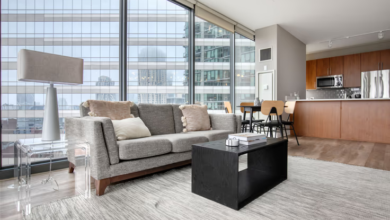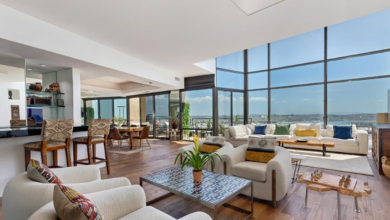
By 2026, spatial computing will feel ordinary. Buyers will no longer scroll through listings, they will step inside them. As that shift accelerates, flat real estate photos won’t just underperform. In immersive headsets, they look lifeless.
Spatial displays amplify everything: light imbalance, clipped highlights, crushed shadows, crooked lines. Issues that were tolerable on MLS thumbnails become impossible to ignore in VR. This is why high-dynamic range photography is no longer optional. It is structural.
As real estate AI photo editing becomes the backbone of modern listing workflows, HDR is the visual foundation that determines whether photos translate into believable spatial environments, or fall apart.
Why Flat Photos Fail in Spatial Headsets
Traditional listing photography was designed for phones and desktop screens. Spatial headsets operate under completely different rules.
Instead of passively displaying images, they analyze contrast, depth cues, and light relationships. When tonal data is weak or inconsistent, immersive systems struggle to interpret space. Interiors feel hollow. Windows glow unnaturally. Shadows collapse into noise.
Flat images don’t just lose impact in spatial viewing, they actively damage realism.
HDR’s Role in Depth Mapping and 3D Conversion
Spatial listings are built, not rendered. Technologies like depth mapping and Gaussian splatting analyze image data to infer geometry, surface distance, and spatial relationships.
HDR plays a central role in this process.
Depth algorithms rely on clean tonal separation between highlights, midtones, and shadows. When HDR is balanced correctly:
- Edges become clearly defined
- Light falloff behaves naturally
- Surfaces separate from one another
- Objects occupy believable depth
When HDR is poorly executed, over-processed or under-exposed, depth systems misread the scene. The result is warped geometry, uncomfortable viewing, and visual noise.
For spatial real estate workflows, “good HDR” is not about dramatic contrast. It’s about accuracy.
What Spatial-Ready HDR Actually Requires
Spatial photography demands restraint and consistency. The goal is to produce images that are visually calm, structurally sound, and easy for 3D systems to interpret.
Platforms like AutoHDR focus on two core areas because they matter most for spatial conversion.
Core Image Editing (The Foundation)
These adjustments prepare images for immersive use and cannot be skipped:
- Sky placement to restore exterior balance
- Window masking to merge indoor and outdoor light correctly
- White balance correction for accurate color temperature
- Camera removal to eliminate visual artifacts
- Image straightening to preserve architectural geometry
These edits ensure that every photo contains reliable tonal and structural data.
It’s important to separate this from manual sorting. Sorting is workflow management. HDR merging and tonal correction are image science. Confusing the two leads to inconsistent results.
Add-Ons (Secondary Enhancements)
Add-ons enhance presentation when used carefully, but they are not the primary value driver in spatial workflows:
- Virtual twilight for exterior mood
- Grass greening for seasonal consistency
- Virtual staging for contextual clarity
In immersive environments, moderation matters. Excessive manipulation can interfere with depth perception and realism.
Why Automation Is Essential for Spatial Listings
Spatial computing does not tolerate inconsistency. When dozens, or hundreds, of images feed into a 3D reconstruction pipeline, even minor tonal variations compound into visible errors.
This is where automated real estate AI photo editing becomes essential.
AutoHDR processes full real estate photo shoots in under five minutes, delivering consistent HDR balance across every frame. There is no editor fatigue, no subjective drift, and no 12–24 hour turnaround delay.
With pricing as low as 40 cents per photo, automation isn’t just faster, it’s economically viable at scale.
Consistent automation ensures:
- Uniform tonal logic across entire properties
- Predictable depth data for spatial conversion
- Scalable workflows for large listing volumes
These factors are critical as spatial platforms move from novelty to expectation.
See also: Finding the Greatest Real Estate Prospects with Marina Del Rey Realtors
Preparing for Apple Vision Pro–Style Listings
Devices like Apple Vision Pro are setting new standards for how real estate is experienced. Buyers will expect listings that feel comfortable, natural, and spatially correct.
That experience starts long before 3D reconstruction or headset delivery. It starts with HDR.
No spatial system can fix blown highlights, muddy shadows, or warped verticals after the fact. The source imagery must be correct.
AutoHDR was built with this future in mind, balanced light, accurate color, and automated consistency designed by professionals who understand how real estate images are actually used.
The Bottom Line
Spatial computing makes HDR non-negotiable.
As the industry moves toward immersive listings, real estate AI photo editing will be judged on one criterion: how well it prepares images for depth, realism, and scale.
Flat photos will not survive in spatial headsets. Balanced HDR will.
For photographers and teams preparing for 2026, the work starts now, with images designed to live in three dimensions, not just on a screen.