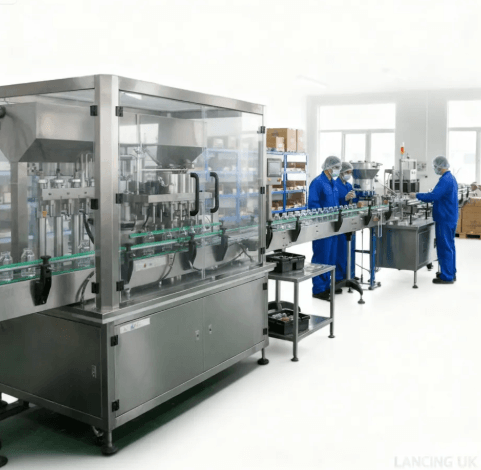
For manufacturers and consumer goods businesses, investing in a new packaging production line represents a significant capital decision , one that requires careful financial analysis to ensure the investment delivers genuine long-term value. Understanding how to properly calculate return on investment (ROI) for packaging equipment helps business leaders make confident, well-justified purchasing decisions.
This article breaks down the key financial considerations involved in evaluating a packaging production line investment, from identifying cost components to calculating realistic payback timelines.
Why a Structured ROI Approach Matters
Packaging equipment investments often involve substantial upfront costs, making it essential to move beyond intuitive or anecdotal justifications and instead build a structured, data-driven financial case. A well-constructed ROI analysis helps businesses compare different equipment options objectively, justify capital expenditure to stakeholders, and set realistic expectations for when the investment will begin generating positive financial returns.
Identifying the Full Cost of a Packaging Line Investment
Before calculating potential returns, businesses need a comprehensive understanding of all costs associated with a packaging production line investment, which typically extend well beyond the base equipment purchase price.
Equipment Purchase Cost
The base cost of the packaging line itself, which can vary significantly based on automation level, throughput capacity, and specific functional requirements.
Installation and Commissioning Costs
Costs associated with installing the equipment, integrating it with existing facility infrastructure, and commissioning the system to ensure proper operation before full production use begins.
Staff Training Costs
Training costs for operators and maintenance staff, which can vary based on the complexity of the new equipment and whether staff have prior experience with similar systems.
Facility Modification Costs
In some cases, facility modifications may be necessary to accommodate new equipment, including electrical upgrades, floor space reconfiguration, or structural changes.
Ongoing Operational Costs
Includes energy consumption, routine maintenance, replacement parts, and any consumable materials required for equipment operation.
Identifying Sources of Financial Return
Once the full cost picture is understood, businesses should identify the specific mechanisms through which a new packaging production line will generate financial returns.
- Labor Cost Reduction – Reduced dependency on manual labor for packaging tasks previously performed without automation
- Increased Throughput Capacity – Ability to produce and package more product within the same operational timeframe
- Reduced Material Waste – More precise, consistent packaging processes that reduce material waste compared to manual methods
- Improved Product Quality and Reduced Rework – Fewer packaging defects requiring rework or resulting in product loss
- Reduced Downtime – More reliable, well-maintained equipment compared to aging or inadequate existing systems
ROI Calculation Framework
The table below outlines a simplified framework for organizing the financial factors relevant to a packaging line ROI calculation.
| Cost/Benefit Category | Type | Example Factors to Quantify |
| Equipment & Installation | One-time Cost | Purchase price, installation, commissioning |
| Training & Onboarding | One-time Cost | Staff training hours, temporary productivity dip |
| Labor Savings | Ongoing Benefit | Reduced headcount or overtime needs |
| Throughput Increase | Ongoing Benefit | Additional units produced per shift/year |
| Waste Reduction | Ongoing Benefit | Reduced material costs from improved precision |
| Maintenance & Energy | Ongoing Cost | Routine maintenance, energy consumption |
| Downtime Reduction | Ongoing Benefit | Reduced production losses from equipment failure |
Working through each of these categories with realistic, business-specific estimates provides a much more accurate ROI picture than relying on generic industry benchmarks alone.
Calculating Payback Period
The payback period represents how long it will take for the cumulative financial benefits of a packaging line investment to equal the total upfront investment cost. This is typically calculated by dividing total upfront investment by the estimated annual net financial benefit (total benefits minus ongoing operational costs).
Businesses should build multiple scenarios , conservative, moderate, and optimistic , when calculating payback period, recognizing that actual results can vary based on factors such as production volume fluctuations or unexpected implementation challenges.
Common Mistakes in ROI Calculations
Businesses evaluating packaging line investments should be aware of common pitfalls that can lead to inaccurate ROI projections:
- Underestimating installation, training, or facility modification costs
- Overestimating throughput improvements without accounting for realistic ramp-up periods
- Failing to account for ongoing maintenance and consumable costs
- Not considering the financial impact of production downtime during installation and transition
- Using overly optimistic assumptions without building conservative scenario alternatives
Avoiding these common mistakes helps ensure ROI projections remain credible and useful for actual decision-making purposes.
Financing Considerations
For businesses concerned about the upfront capital requirements of a packaging line investment, various financing options may be available, including equipment financing loans, leasing arrangements, or in some cases, vendor financing programs offered directly by equipment suppliers. Each financing approach involves different tradeoffs between upfront cash requirements and total long-term cost, which should be factored into the overall financial analysis.
Working with Suppliers on Realistic Projections
Reputable packaging equipment suppliers should be able to provide realistic throughput specifications, maintenance requirements, and energy consumption data to support accurate ROI calculations. Businesses should be cautious of suppliers offering only best-case performance claims without supporting data, and should seek references from similar businesses where possible to validate expected performance outcomes.
Final Thoughts
A thorough, well-structured ROI analysis is essential for making confident, well-justified decisions about packaging production line investments. By carefully identifying all relevant costs and benefits , from labor savings and throughput improvements to ongoing maintenance and energy costs , businesses can build realistic financial projections that support sound capital investment decisions.
Partnering with an experienced supplier of packaging production line systems, one willing to provide detailed, realistic performance data to support financial planning, ultimately helps businesses make packaging equipment investments with greater confidence and clarity.