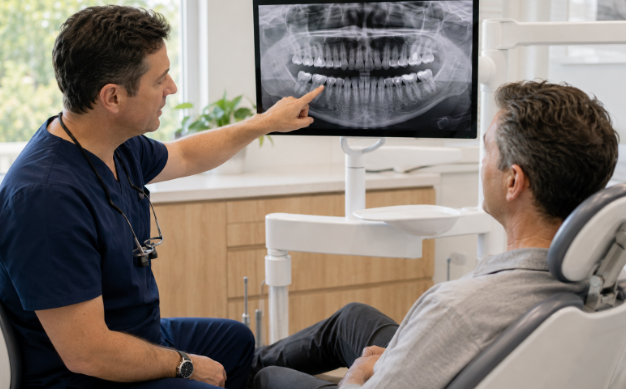
Dental visits often involve more than a visual examination. While checking the teeth and gums is an essential part of routine care, it does not always provide the full picture. Some oral health conditions develop below the surface or in areas that are difficult to assess without imaging. Knowing when Dental X-Rays are typically recommended can make it easier to understand their role in everyday dental care.
New patient appointments and baseline records
One of the most common times a dentist may recommend X-rays is during an initial appointment. For a new patient, imaging can help establish a baseline record of current oral health. This is especially useful if there is limited access to past dental history or if several years have passed since previous imaging was taken.
Baseline X-rays help identify existing fillings, hidden decay, bone levels, unerupted teeth, and other conditions that may not be obvious during a routine examination. Once these images are on file, they also make it easier to compare future changes and monitor the mouth over time.
See also: How Cognitive Behavioral Therapy in Santa Clara Helps You Rebuild Your Thoughts and Your Life
Ongoing check-ups for preventive care
Dental X-rays may also be part of regular preventive care, although they are not always needed at every visit. Dentists usually decide based on the patient’s individual risk factors. Someone with a history of tooth decay, gum disease, dry mouth, or extensive dental work may benefit from more frequent imaging than someone with a consistently low risk of oral disease.
Bitewing X-rays are often used during check-ups because they can show the spaces between back teeth where decay commonly develops. These areas are difficult to assess with a mirror alone, which is why small cavities may otherwise go unnoticed until they become more advanced.
Symptoms that need a closer look
When a patient reports pain, swelling, sensitivity, or discomfort while chewing, dental imaging often becomes an important next step. Symptoms like these can have different causes, and an X-ray can help narrow them down. A sore tooth might be linked to deep decay, an abscess, a crack, gum problems, or trauma from grinding.
In these cases, imaging supports faster and more accurate diagnosis. Rather than treating symptoms based on appearance alone, the dentist can identify the exact area affected and determine how severe the problem is. That leads to more suitable treatment and can reduce the chance of the issue returning.
Monitoring children and developing teeth
Children and teenagers often need dental X-rays for reasons that differ from adults. As the mouth develops, imaging can help track the eruption of adult teeth, identify crowding, and check whether any teeth are missing, impacted, or coming through in an unusual position.
These images are useful for both general dental care and orthodontic planning. They can also reveal early decay in children, which is important because baby teeth still play a major role in speech, nutrition, and guiding permanent teeth into place. Early monitoring can support timely care and help avoid larger issues later.
Planning treatments with greater accuracy
X-rays are commonly used before many dental procedures because they provide information that affects treatment planning. A dentist may need imaging before removing a tooth, placing a crown, performing root canal treatment, or assessing suitability for dental implants. In each case, the image helps clarify the condition of the tooth roots, surrounding bone, and nearby structures.
This is particularly important when treatment decisions involve the jawbone or teeth below the gumline. Without imaging, important details may be missed. With it, care can be planned more precisely and carried out with a clearer understanding of what is happening beneath the surface.
Reviewing changes over time
Oral health is not static. Teeth, gums, bone levels, and dental restorations can all change gradually over the years. X-rays help dentists monitor these changes in a way that a visual exam alone cannot always achieve. Comparing current and previous images can show whether decay is developing under an old filling, whether bone loss has progressed, or whether a previously treated tooth remains stable.
This ongoing record supports long-term care rather than one-off treatment decisions. It helps dentists respond to changes before they become more difficult to manage, which is one of the core goals of preventive dentistry.
A useful part of modern dental care
Dental X-rays are recommended when they add meaningful information to a patient’s care. They are not simply routine extras. They are used to detect problems that may be hidden, clarify symptoms, monitor development, and support treatment planning. For patients, understanding this purpose can make the process feel more relevant and less uncertain.
When used appropriately, dental imaging helps dentists make informed decisions and supports a more complete approach to oral health across different ages and stages of care.