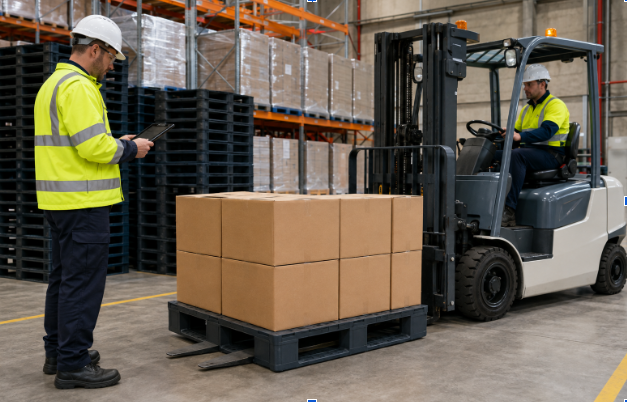
Efficient warehousing depends on more than shelving, forklifts and inventory systems. The type of pallet used can affect workplace safety, hygiene, transport costs and product damage rates. Many Australian businesses are reviewing traditional timber options and considering alternatives such as heavy duty plastic pallets for demanding storage and distribution environments. Understanding how different pallet materials perform can help warehouse managers make more practical long-term decisions.
Why Pallet Choice Matters
Pallets are often treated as a basic operational item, yet they carry significant responsibility. They support goods through storage, handling, loading and transport. A weak or damaged pallet can lead to unstable loads, product loss or safety risks for staff.
In busy warehouses, pallets may be moved several times before goods reach their final destination. This makes strength, consistency and durability important. A pallet that performs reliably under repeated handling can reduce interruptions and help maintain safer workflows.
See also: How Cognitive Behavioral Therapy in Santa Clara Helps You Rebuild Your Thoughts and Your Life
Strength and Load Stability
One of the main considerations when choosing pallets is load capacity. Heavy goods, stacked cartons, bulk materials and industrial products require a pallet that can hold weight without bending, cracking or becoming unstable.
Plastic pallets are manufactured to consistent dimensions, which can help with load balance and racking compatibility. Unlike timber, they are less likely to splinter or develop irregular weak points from moisture exposure. This consistency can be useful in warehouses where pallets are used repeatedly across automated or semi-automated systems.
Hygiene and Clean Handling
Hygiene is a major concern in sectors such as food processing, pharmaceuticals, healthcare, agriculture and export packaging. Timber pallets can absorb moisture and may be harder to clean thoroughly after spills or contamination.
Plastic pallets generally have non-porous surfaces, making them easier to wash, sanitise and inspect. This can support cleaner handling practices and reduce the risk of odours, mould or pest issues. For businesses that must meet strict hygiene standards, this can be an important operational advantage.
Durability in Australian Conditions
Warehouses and transport environments in Australia can expose pallets to heat, dust, moisture and rough handling. Outdoor storage, long-distance freight and frequent forklift movement can quickly wear down poor-quality pallets.
Durable plastic pallets can withstand repeated use without many of the common problems linked to timber, such as loose nails, broken boards or splintering. This does not remove the need for regular inspection, but it can reduce replacement frequency when pallets are matched correctly to their intended use.
Safety Benefits for Staff
Workplace safety should be a central part of pallet selection. Damaged pallets can create trip hazards, unstable loads and manual handling risks. Splinters, sharp edges and exposed fasteners can also increase the chance of minor injuries.
Plastic pallets are often designed with smooth surfaces and consistent edges. Their uniform construction can make them easier to handle and stack safely. When combined with good warehouse procedures, suitable pallet selection can contribute to a safer working environment.
Cost and Lifecycle Considerations
The lowest upfront cost is not always the most economical choice. Pallets that break often, damage stock or require frequent replacement can become expensive over time. Businesses should consider the full lifecycle cost, including durability, cleaning, storage efficiency and disposal.
Plastic pallets may cost more initially than some timber alternatives, but their longer service life can make them practical for closed-loop systems, repeat transport routes and high-use warehouse operations. They may also support better inventory control where pallet dimensions and performance need to remain consistent.
Making a Practical Decision
The right pallet depends on the products being stored, the handling equipment used, hygiene requirements, transport conditions and budget. A warehouse moving lightweight cartons will have different needs from one handling chemicals, export goods or heavy industrial materials.
Before changing pallet types, businesses should assess load weights, racking systems, cleaning processes and staff handling requirements. Choosing pallets based on real operating conditions helps create safer, cleaner and more efficient warehouse operations.