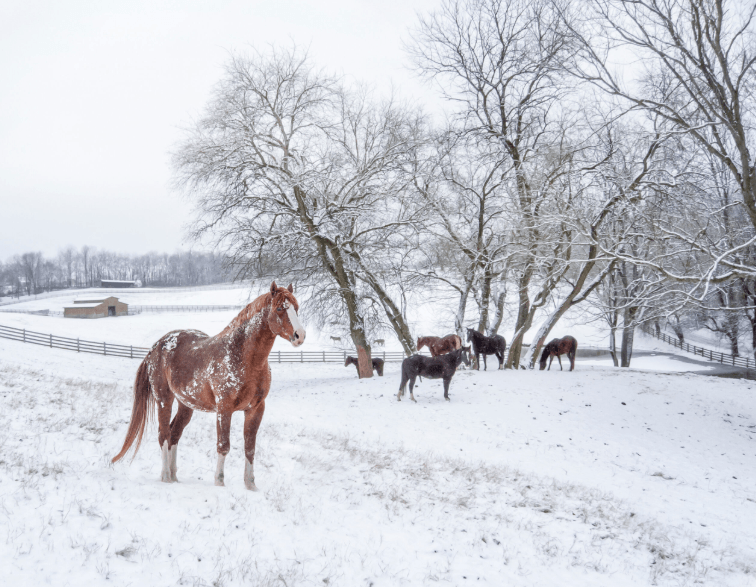
Heavy rain can change a horse arena’s surface overnight. Water pools in low spots, pushes footing toward the edges and leaves some areas soft while others pack down hard. Even when the arena looks dry, the footing underneath can still be uneven. Before you ride again, check the surface, let it drain and groom it at the right time.
Check Your Horse Arena for Rain Damage
Once the rain stops, walk the arena and look for:
- Standing water or puddles
- Deep hoof prints or ruts
- Footing pushed by the rain into corners or against the rails
- Thin areas where you can see the base
- Fine silt left in low spots
Keep horses and machinery off the arena while it’s waterlogged. Riding or grooming wet footing pushes material around and creates deeper ruts. It also makes the surface harder to fix later.
Fix Arena Drainage Problems
If water still sits in the arena long after the rain stops, check the drainage. Clear leaves and debris from drains and channels so water can flow away from the riding surface. Low spots and blocked drains are common causes. If the same areas pool after every storm, they may need regrading or new drains.
Grooming levels the footing, but it can’t fix poor drainage. Solve any drainage problems first, then start regular grooming.
When to Groom an Arena After Rain
The right time to groom depends on your footing, your drainage and how much rain fell. Every arena dries at its own pace, so check the surface itself before you start.
Groom when the footing loosens and levels without sticking to the tines or leaving deep tracks. If it’s still sticky or waterlogged, wait longer. Grooming too early mixes extra water into the footing.
Waiting too long causes the opposite problem. Dry, loose footing moves easily and creates dust. If the surface dries out before you groom, a light watering will help hold it together.
How to Level Arena Footing After Rain
Rain makes ruts, ridges and uneven patches easier to see, especially along the track and in the corners. Move the footing from the edges and low spots back across the arena. Loosen hard, compacted areas, but avoid digging into the base.
Check the footing depth as you go. If you only spread loose footing over a low spot, you hide the problem instead of fixing it. If the base itself is uneven, repair it first, or the footing won’t stay level.
Choosing an Arena Groomer for Wet Footing
After heavy rain, you need a groomer you can adjust to suit soft or uneven footing. A Premium Arena Groomer uses conditioning tines to loosen and mix the footing, and it also has a packer roller to finish the surface.
You set the tine depth by winding the height adjuster to choose a depth from 10 mm to 200 mm. Locks hold the setting, so the depth stays the same while you work. On wet or recovering footing, it’s best to start shallow and go deeper where the surface has packed down hard.
You can also fit optional packer bars to the roller. These make grooming quieter and smoother, and help you get the right surface for sand, limestone, fibre or synthetic, wood and rubber chip mixes.
The groomer is available in a standard width of 1.5 m, and you can also order other sizes. You can tow it behind an ATV or quad, or remove the drawbar and run it on a tractor’s three-point linkage. Check that your vehicle has enough pulling power for the groomer.
Check the Arena Before Riding
After grooming, walk the arena again and test different areas underfoot. Look for soft patches, deep tracks, bare base and loose sections. If some areas still hold water or move too much underfoot, give them more time or plan further repairs.
The right footing depth and firmness depend on your riding discipline, your horse’s work and your arena materials. If you’re not sure the surface is safe, ask an arena specialist to check it before you ride.
How to Protect Your Arena From Heavy Rain
A few simple habits will help you keep your arena in good shape through wet seasons:
- Check the surface after every storm: Look for puddles, washed-out areas and changes in footing depth.
- Keep drains clear: Remove leaves and debris so water can drain away from the arena.
- Watch the edges: If footing keeps building up along the rails, rain or regular riding may be moving it.
- Groom regularly: Keep the footing at an even depth so small problems don’t grow.
- Water during dry spells: Damp footing stays more stable and creates less dust.
Get Your Arena Ready to Ride Again
After heavy rain, check the damage, fix any drainage problems and wait for the footing to dry enough. Then groom the footing to the right depth. If you follow these steps after each storm, your arena will stay even, stable and ready to ride.