Introduction
Modern product development demands speed, accuracy, and flexibility—three things traditional manufacturing often struggles to deliver. Lengthy production cycles, high error rates, and costly rework can slow innovation and inflate budgets. This is where advanced CNC machining plays a transformative role. By combining digital design with automated, high-accuracy production, manufacturers can convert creative ideas into real products faster, with less waste and greater consistency.
Understanding Modern CNC Machining in Precision Manufacturing
At its core, modern CNC machining is a digitally controlled subtractive manufacturing process. Engineers begin with a CAD-based 3D model, which is translated into machine-readable instructions (G-code). These instructions guide cutting tools to remove material from solid blocks with exceptional accuracy.
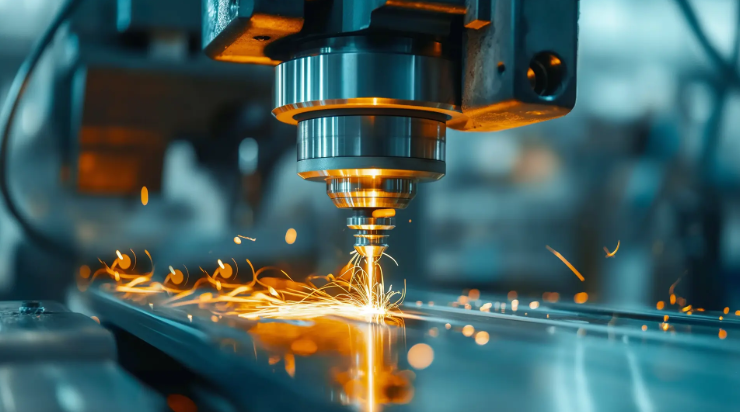
The CNC machining milling workflow follows a seamless path—from digital design and programming to setup and final execution. Unlike manual machining, CNC systems offer superior repeatability, micron-level precision, and the ability to manufacture complex geometries without human variability. This level of automation allows manufacturers to achieve results that are virtually impossible with conventional tools.
How CNC Milling Expands Creative Design Possibilities
Precision Meets Design Freedom
One of the greatest strengths of CNC milling lies in its ability to produce intricate shapes, organic surfaces, and tight-tolerance features. Designers are no longer forced to simplify concepts due to manufacturing limitations. Instead, CNC milling enables bold, design-driven innovation.
Wide Range of Milling Operations
CNC milling supports a broad set of operations, each tailored to specific design requirements:
Essential Structural Operations
- Face milling for flat reference surfaces
- Pocket milling for cavities and internal features
Advanced Precision Operations
- Contour milling for complex 2D shapes
- 5-axis simultaneous machining for intricate 3D components
This versatility allows engineers to move beyond basic geometries and focus on lightweight designs, optimized strength, and functional aesthetics.
A Shift Toward Design-Led Manufacturing
With fewer production constraints, manufacturers experience a shift from “manufacturing-limited design” to “design-driven manufacturing.” The ability to machine complex features accurately becomes a catalyst for innovation rather than a bottleneck.
Quality Control Advantages of Precision CNC Milling
Built-In Quality, Not Post-Process Inspection
Unlike traditional methods where inspection occurs after production, precision CNC milling embeds quality control throughout the entire process. Potential errors are identified during digital simulation, toolpath optimization, and collision detection—before any material is cut.
Real-Time Accuracy and Monitoring
Advanced CNC systems maintain accuracy during machining through:
- Rigid machine structures and high-performance tooling
- Precise motion control systems
- On-machine probing to measure critical dimensions
These systems automatically compensate for tool wear or thermal changes, ensuring dimensional accuracy from the first part to the last.
Reduced Scrap and Reliable Consistency
By integrating quality checks throughout production, CNC milling significantly lowers defect rates and material waste. Each finished part closely matches its digital design, making the process ideal for industries that require strict tolerances and certified quality systems.
See also: How GPR Technology Saves Municipalities Millions in Infrastructure Costs
Boosting Productivity with CNC Machining Services
Partnering with professional CNC machining service providers can dramatically improve workflow efficiency. Instead of investing heavily in machinery, staffing, and training, companies can access advanced manufacturing capabilities as needed.
For startups and R&D teams, this approach enables rapid prototyping and shortens the learning curve. Established companies benefit by scaling production during peak demand or outsourcing complex components while focusing on innovation and market strategy.
By converting fixed manufacturing costs into flexible operational expenses, businesses gain agility and can move from prototype to functional product in as little as 1–3 days.
What to Look for in a Precision Machining Partner
Choosing the right machining partner goes far beyond machine specifications. Key factors to evaluate include:
- Expertise in complex CAM programming
- Deep knowledge of material behavior
- Advanced quality control systems and certifications
- Use of precision metrology tools such as CMMs
- Flexibility to handle both low-volume and high-volume production
Strong communication, project management, and process transparency are equally important. A capable partner ensures that precision, consistency, and efficiency are embedded at every stage of manufacturing.
Conclusion
Precision CNC machining is not just a production method—it is a complete manufacturing solution that integrates digital design, automation, and rigorous quality control. Its unmatched accuracy, flexibility, and repeatability help reduce prototype waste, shorten development cycles, and bring innovative products to market faster.
For companies aiming to transform ideas into reliable, market-ready products, leveraging the advantages of precision CNC milling can be the foundation of long-term success.