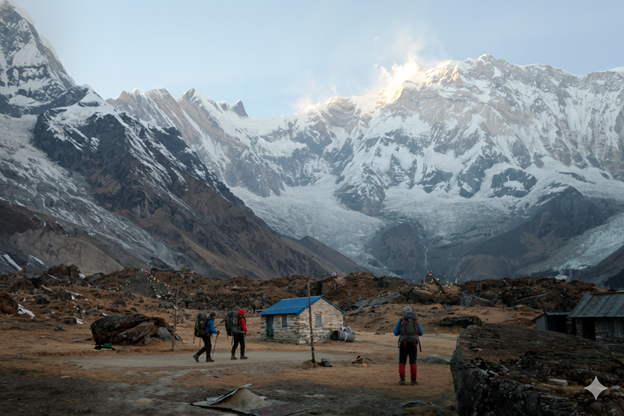
Annapurna Base Camp (ABC) Trek is one of the most renowned trekking paths in Nepal that brings hikers to the depths of the beautiful Annapurna Sanctuary. The trail is bordered by stunning mountains, including Annapurna I, Machapuchare, and Hiunchuli, which offer a unique mix of mountainous landscapes, forested areas, and traditional villages. The trip has, over the decades, been drawing tourists who want the beauty of the world and the richness of the culture.
Over the last few years, there has been a surge in the number of trekkers who explore shorter itineraries that are more appropriate when they have little time on vacation. Due to better accessibility through the roads, jeep tracks to major trailheads, and well-coordinated trekking paths, access to the base camp now takes a shorter time without losing its spirit. These have resulted in increased flexibility and efficiency of the trip.
This Short Annapurna Base Camp Trek Itinerary: Reach ABC Faster in 5-7 Days is a good itinerary to be undertaken by physically fit trekkers, adventure seekers with limited time, and by those who have trekked in the area previously. You will be able to enjoy the best of the ABC trek without wasting your days on the trek.
Why Choose a Short Annapurna Base Camp Trek?
A short trek to the Annapurna Base Camp is largely a decision to make the best out of time and not about the experience. It is a shortcut that enables trekkers to explore the core of the Annapurna Sanctuary in fewer days.
It is best suited to individuals who cannot invest much time in a holiday. The access to these trails is enhanced, and the daily stages should be managed and facilitated, thus making the journey easier and more efficient.
The trek has the key attractions of the region, even though it is short. You will be able to have a close-up shot of Machapuchare and Annapurna I, walking in some beautiful alpine, as well as, you will be able to enjoy the natural hot springs in Jhinu Danda.
Even without the help of planning and going at a slow pace, even shorter acclimatisation days can be safe. This brief ABC trek is also popular among professionals and adventure travellers who want to enjoy a quick ABC trek without the need to take too many necessary belongings.
Standard vs Short ABC Trek: What’s the Difference?
The average Annapurna Base Camp trek typically lasts between 10 and 12 days, and it begins with the conventional trailheads and involves walking a greater distance. As compared to that, the short ABC trek saves on time by taking jeep-reachable roads, whereby the trekkers may start near the main trail. This reduces the number of trekking days greatly.
Accessibility by road reduces the distance without altering the destination or the highest point of the road. The altitude gain is also similar, but the short version is more demanding, as it is accomplished within shorter time periods.
The conventional trek is ideal for those who are comfortable with a slow pace, whereas the short ABC trek can suit trekkers who are fit and want to have a faster and more efficient adventure.
Itinerary
Day 1: Pokhara to Jhinu Danda / Chhomrong
The trip starts with a morning trip by car from Pokhara to Jhinu Danda or a nearby trailhead, respectively, based on the state of the roads. The journey lasts approximately 3-4 hours and is scenic, with rivers, hills, and terraced agricultural land being seen. In this place, the journey begins with a slow ascending process through the small villages and stone steps.
The average time of walking is 4-5 hours. Jhinu Danda is at an elevation of approximately 1,780 meters, and Chhomrong is a little higher at 2,170 meters. The highlights of the day involve the warm hospitality of the village, mountain views, and a first experience with the Annapurna region landscape.
Day 2: Chhomrong to Himalaya / Deurali
The trail that is taken today is steep down to the Chhomrong Khola and then gradually up through the deep forests of bamboo and rhododendron. The path is along the Modi Khola with little villages and tea houses brought along the path. The hiking lasts approximately 6-7 hours with frequent breaks to rest and have meals.
The higher the altitude, the cooler and thinner the air is, and thus, a constant speed is essential. Himalaya or Deurali, situated between 2,900 and 3, 200 meters, is a nice resting place with dramatic cliffs and waterfalls.
Day 3: Deurali to the Annapurna base camp using Machapuchare base camp
The terrain varies significantly, presenting the trail with the high alpine area of the Annapurna Sanctuary. This direction leads to Machapuchare Base Camp, which stands at 3,700 meters and is wider now with breathtaking mountainous landscapes. The snow-capped peaks are amazing to see in all directions, and this is an immersive experience.
The last trek to the Annapurna Base Camp is slow and gratifying. It is a privilege to get to ABC at an altitude of 4,130 meters, more so when it is sunset, the surrounding mountains are bathed in golden sunlight. This can be taken to be the most memorable day of the trek.
Day 4: Annapurna Base Camp to Bamboo
The trekkers are also able to witness a spectacular view of the sunrise above Annapurna I and the other mountains in the morning. Once breakfast is taken, one starts one’s descent on the same trail, which is physically easier. The usual time required to walk downhill is about 5 to 6 hours, and it follows Machapuchare Base Camp and Deurali once more.
The lower the altitude, the simpler it is to breathe and the warmer the temperatures are. Bamboo is placed amidst greenery and provides a good place to sleep. It is a casual day that gives one time to sightsee and revitalise.
Day 5: Bamboo to Jhinu Danda (Hot Springs)
Going downhill, the trail passes through forests and little villages and back to Jhinu Danda. It is a 5-hour hike that is more relaxing following the high-altitude days. The major attraction here is the natural hot springs, which are found in proximity to the Modi Khola.
Once you get to Jhinu, it is only a couple of steps to the pools where the muscles can unwind to their maximum. One can relax in warm water along the river, which is an ideal conclusion to the trekking part of the expedition. This is a day of rest and recuperation.
Day 6-7 (Optional): Back to Pokhara / Buffer Days
The additional days can be helpful when there is a weather delay, a slower pace of the walk, or additional comfort. Trekking in Jhinu Danda, the trekkers may choose to walk or drive back to Pokhara. These buffer days can be used to take photographs, tour the villages, or just rest after the trek. They also make the itinerary more flexible and safer, so as to have a better experience without the need to be in a hurry.
Trek Difficulty and Fitness Level Required
The Short Annapurna Base Camp Trek is a moderately difficult one and demands good physical condition. Trekkers are expected to hike up and down the mountain steps of stone and other rough trails for many hours a day.
The daily time spent walking is between 5 and 7 hours, in many instances accompanied by high-rate elevation. It is necessary to keep up the speed and hydration properly to stay safe and comfortable.
The given itinerary is the most appropriate one for an active trekker and adventure traveller who is experienced in hiking. The short version can be challenging to beginners, slow walkers, or those who are sensitive to altitude, and can therefore use a longer route.
Best Time for a Short ABC Trek
The spring is considered to be one of the most suitable seasons to take a short ABC trek from March to May because of the mild temperatures, and the forests are in blossom with colourful rhododendron. The climate can be considered to be rather stable, and faster trekking is more pleasant.
The fall, a period between September and November, is clear, dry, and has great mountain scenery. These are the best conditions for a shorter and more efficient itinerary.
During winter, trekking can also be done, but it will be cold, and snow will be found at the higher altitudes. The seasons of the monsoon are characterised by heavy downpour and wet trails, which is not a good time to have a fast trek.
Permits and Treks Preparation
Trekking to the short Annapurna Base Camp requires the trekker to acquire a TIMS Card and the Annapurna Conservation Area Permit (ACAP). The permits aid in the control of tourism and aid in conservation in the area. They both could be easily obtained in Kathmandu or Pokhara.
A faster itinerary requires proper preparation. Lightweight packing makes it easier to move around and less fatiguing. Pay attention to basic equipment like durable shoes, cold-weather clothing, and a raincoat, as well as personal health supplies.
Cost Breakdown for Short ABC Trek
The general price of a short ABC trek is based on the kind of trekking and selected services. The fee for permits is constant and constitutes a minor portion of the overall budget. It is also safer and more comfortable to hire a licensed guide or porter, particularly when one is on a tight schedule.
Prices of accommodation and food depend on the altitude, and the prices are higher at high altitudes. The costs of transportation entail a jeep or a personal vehicle between Pokhara and the trailhead, which assists in reducing the time of the trek.
Tips to Reach ABC Faster and Safely
The early morning walk is useful as the weather tends to change in the afternoons, and one gets more time to walk steadily. A light backpack would help in relieving the burden and would also help in dealing with long, steep areas.
It is very advisable to employ a skilled guide with a limited itinerary since he/she can keep up the pace, check on health, and select the most favourable paths. A guide also provides a certain element of safety in rotting mountain conditions.
It is important to maintain hydration and manage altitude symptoms. Strolling and having brief rests can keep them from getting tired and tired of the altitude.
Conclusion
A shorter itinerary enables the trekkers to enjoy the Annapurna Sanctuary’s beauty within a constrained time frame. When one is well prepared, fit and well plannd their route, the journey can be a rewarding and safe one.
Instead of going in a hurry, clever scheduling and expert advice are all that count. Meticulous trekking promises fun, at the same time preserving the delicate mountain habitat. This Short Annapurna Base Camp Trek Itinerary provides the perfect balance of action, performance and memorable high-altitude scenery in the Himalayas.