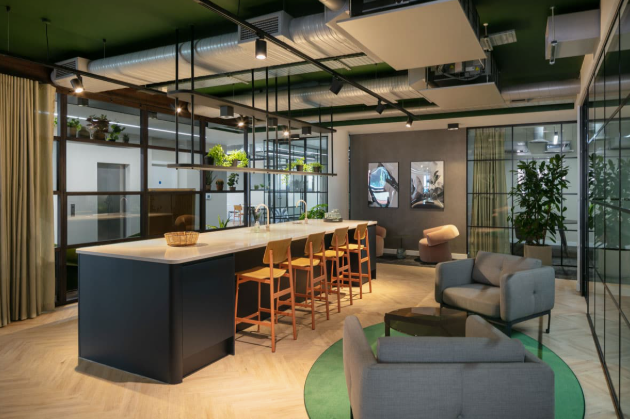
What Are Key Commercial Carpentry Elements to Plan before Starting an Office Fit Out

You are doing an office fit out. New space.Fresh start.Maybe a brand new building or finally fixing up the old one.
Lot to think about.Layouts. Paint colours. Desks and chairs. Who ends up in which corner.
But there is one thing people forget until it is too late. The carpentry.
Not the pretty stuff you see in magazines. The guts.The framing.The joinery that actually makes the place work. Commercial carpentry turns an empty shell into somewhere people can actually do their jobs. If you leave it to the last minute, you are looking at delays, money blowing out, and settling for stuff you do not really want.
Here is what you need to sort before anyone picks up a hammer. No jargon. Just the stuff that matters.
Overview
Before anyone swings a hammer, you need to know what is behind those walls.
Every commercial space comes with existing services. Air conditioning ducts. Electrical cables.Data cabling.Plumbing. Fire sprinklers. All of it hidden behind ceilings and walls that will need to work around your new carpentry.
If you are planning new partitions, joinery, or ceiling features, your carpentry team needs to know where everything sits. Nothing worse than building a beautiful wall only to find out it blocks a sprinkler head or covers an essential access panel.
In Brisbane, where many offices are in high-rise buildings, there are also rules about what you can and cannot do. Base building guidelines. Floor loading limits. Fire compartmentation requirements. Your carpentry plans need to work within those constraints.
The Big One: Partitions and Wall Framing
This is where most commercial carpentry starts.
Partitions divide your space. They create offices, meeting rooms, breakout areas. They can be full height or partial. Solid or glazed.Standard or acoustic-rated.
Acoustic partitioning cannot be compromised in case you require privacy, such as meeting rooms or offices. And that would involve added insulation, closed joints, and a lot of attention to details to ensure that sound does not escape through them. In case you would like glazed partitions to allow light to pass through, then your carpentry crew must liaise with the suppliers of glass. The framing has to be dead straight and perfectly level, or the glass will not fit.
Fire-rated partitions are another layer. If your space requires fire compartmentation, those walls have specific construction requirements. Fire-rated materials.Intumescent seals. No gaps. Everything to code.
In Brisbane, commercial projects require compliance with the National Construction Code and local regulations. Your carpentry contractor should know what applies to your space.
See also: Exceptional Concrete Floor Refinishing for Brisbane Homes & Businesses
Joinery: The Stuff You See and Touch
Joinery is the custom-built stuff. Reception desks.Breakout benches.Storage walls.Kitchen cabinetry.Boardroom tables.
This is where commercial carpentry meets design. And it is where planning pays off.
Custom joinery takes time. Weeks sometimes. If you order it after construction starts, you will be waiting. And waiting. Meanwhile, your whole fit out stalls.
The best approach is to have your joinery designed and ordered before demolition even starts. That way, when the walls are up and the floors are down, your joinery arrives ready to install. No delays.
Think about functionality too. That beautiful reception desk needs space for computers, cables, and someone sitting behind it. That kitchen needs plumbing and power exactly where the cabinets go. All of that has to be mapped out in advance.
A good commercial carpentry team will work with your designer to make sure everything fits and functions before anything gets built.
Ceilings: More than Just Overhead
Ceilings are easy to forget until they are not done.
In commercial spaces, ceilings hide a lot. Air conditioning ducts. Data cables.Electrical conduit. Fire sprinklers. All of it needs to be accessible for maintenance and future changes.
Suspended ceilings, the standard grid type, are straightforward. But feature ceilings, timber battens, curved plaster, floating panels, require serious carpentry skill. They also need to integrate with everything above them.
If you want exposed services, industrial look, your carpentry might involve bulkheads and soffits to hide the messy bits. Those need planning too.
In Brisbane, ceiling heights and materials also affect fire compliance. Some finishes require sprinkler adjustments. Your carpentry team should coordinate with fire services early.
Flooring Substrates and Raised Access
What goes under your floor matters as much as what goes on top.
In case you are laying new floors, the base should be correct. The slabs of concrete should be ground or leveled. Subfloors of timber could be in need of fix or reinforcement.
Raised access floors are predominant in offices that are technical. That is the modular panels that allow running cables underneath. They create a plenum for air distribution too. Installing them properly requires carpentry skills and coordination with every other trade.
If you are changing floor levels, ramps or steps, that is carpentry too. And it needs to meet accessibility standards. Door widths.Turning circles.Ramp gradients.All of it.
Acoustic Treatments and Wall Panelling
Open plan is great until you cannot hear yourself think.
Acoustic treatments are becoming standard in modern offices. Slat walls that are acoustically supported. Fabric-wrapped panels.Ceiling acoustic baffles. All of it requires carpentry to install properly.
These are things that must be factored into the design during its inception and not as an adjunct. They influence the placement of lighting, sprinklers and furniture arrangements.
In meeting rooms, acoustic separation is critical. If your carpentry team does not get the detailing right, sound leaks. Meetings get overheard. Privacy goes out the window.
The Compliance Maze
Commercial fit outs in Brisbane have rules. Lots of them.
Fire safety is the big one. Any changes to walls, ceilings, or joinery can affect fire compartmentation. Sprinklers may need relocating. Fire alarms may need adjusting. Your carpentry plans need to work with the fire engineer from day one.
Accessibility is another. Commercial spaces must meet disability access standards. Door widths, circulation spaces, accessible bathrooms. Your carpentry directly affects all of it.
Then there is the Building Code of Australia. Commercial projects require certification. Your carpentry work will be inspected. If it is not up to code, you fix it before you move in.
Experienced commercial carpentry professionals know this stuff. They work with certifiers. They build to code. They save you from expensive surprises.
Working with the Right Team
Here is the simple truth. Your office fit out is only as good as the team doing the carpentry.
Good carpenters cost more. They also save you money. They get it right the first time. They coordinate with other trades. They build things that last.
If you are looking for office fit outs Brisbane businesses trust, ask about their carpentry team. See examples of their work. Check that they understand commercial compliance.
A good fit out company will have in-house carpenters who know their stuff. Not subbies they found last week. People who have worked together before and know each other’s standards.
FAQs
1. When should I start planning the carpentry for my office fit out?
Day one.Seriously. The carpentry touches everything. Where walls go. How services run. How long the whole thing takes. Get your carpentry team in the room while you are still sketching ideas. Way easier to fix things on paper than after walls go up.
2. What is the difference between standard partitions and acoustic partitions?
Standard ones just divide up space. Acoustic ones actually stop sound from travelling through. They have extra insulation stuffed inside, seals around the edges, and joints that do not let noise sneak through. If you need a meeting room where people can talk without the whole office listening in, you want acoustic. If you need a quiet spot away from the open plan chaos, same deal. Do not cheap out on this one.
3. How long does custom joinery take?
Weeks. Could be months if it is a monster project. Reception desks, breakout benches, storage walls, all that stuff takes time to design properly, build carefully, and finish nicely. Get your order in early. Way early. If you wait until demo day, you will be sitting on milk crates waiting for your cabinets to show up while everything else sits idle.
4. Do I need a separate carpenter for different parts of the fit out?
Nah, not if you pick the right crew. A solid commercial carpentry team does it all. Partitions, joinery, ceilings, acoustic panels, the lot.One team.One standard.One person to call if something goes wrong. Way easier than bouncing between different crews who do not talk to each other.
5. What permits do I need for carpentry work in a commercial fit out?
Depends what you are changing. Moving walls needs permits. Anything structural needs sign-off. Fire-rated walls have strict rules. Your carpenter should know exactly what needs approval and handle all that paperwork themselves. That is literally their job. If they stare at you blankly when you ask, find someone else quick.
6. Is it possible to re-use old carpentry by the former tenant?
Maybe, but do not count on it. Old stuff might not meet current rules. Layout probably does not suit how you work. Your carpenter can take a look and give you straight advice on what is worth keeping and what needs to go. Do not simply dab paint on it and make it appear sorted.
7. What is a bulkhead and do I require one?
The boxes in which everything ugly is concealed, which are running across your ceiling, are referred to as bulkheads.Ducts, pipes, cables, that sort of thing. If you like that open ceiling look but do not want to stare at every pipe and cable hanging around, you need bulkheads. They tidy things up without closing the whole ceiling in.
8. How do I know if my carpentry team is any good?
Ask to see stuff they have done. Call past clients. Ask if they actually understand commercial rules. Good tradies are proud of their work and happy to show it off. If they get shifty when you ask, keep looking.
9. What happens if carpentry is not finished on time?
Everything stops. Furniture cannot go in. Staff cannot move in. You are paying rent on an empty space and office rent on wherever your people are camped. Costs add up fast. That is why planning and decent teams matter. They hit their dates.
10. Do I need to think about future changes in my carpentry?
Yeah, if you think you might grow or shuffle things later. Put in demountable partitions now. Run extra services while walls are open. Consider raised floors for cables. Costs a bit more now but saves ripping everything out in a few years. Future you will be grateful.
The Bottom Line
Your office fit out is a big investment. You want it right. You want it on time. You want it to last.
The carpentry is not just the framework. It is the detail. The partitions that give you privacy. The joinery that makes your brand look good. The ceilings that hide the messy stuff. The acoustic treatments that let people work without distraction.
Plan it early. Get good people involved from the start. Make sure they understand commercial compliance, timelines, and how to work with other trades.
In Brisbane, experienced commercial carpentry teams know the local rules. They know what works in high-rise buildings. They know how to deliver on time and on budget.
The right questions must be asked after completing homework before they can show their best abilities. A well-planned fit out with solid carpentry at its heart will provide you with permanent value. The system will function in a reliable manner because you will not spend time awake at night worrying about wall collapses or joinery failures.
The value of that peace of mind should be used to create a strategic plan.