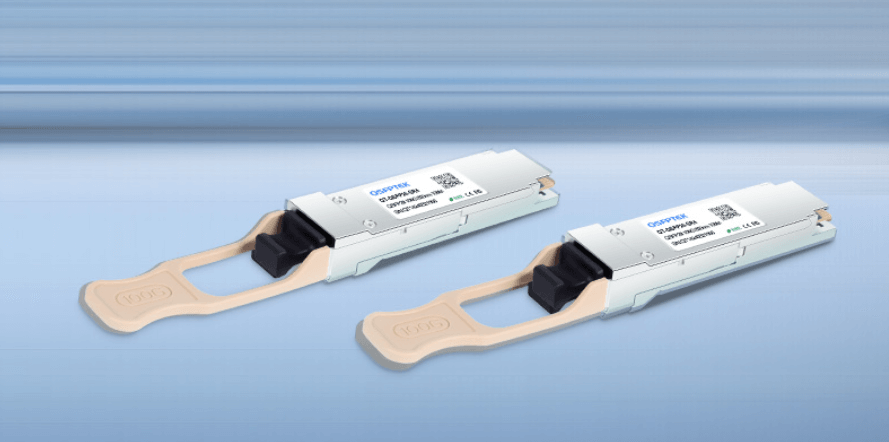
When discussing network upgrades, it’s easy to assume a clean starting point: new switches, new cabling, and a fresh topology designed around the latest speeds. In reality, most enterprise networks are brownfield environments. They are built on years of incremental expansion, mixed hardware generations, and existing fiber infrastructure that still needs to deliver value. In these scenarios, 25G SR often proves to be a more practical and sustainable choice than 40G SR4.
Brownfield Networks Come with Real Constraints
Brownfield networks are defined by what already exists. Many enterprise data centers and campus networks rely heavily on duplex LC multimode fiber that was originally deployed for 10G. Replacing this cabling is not always feasible or cost-effective, especially when fiber pathways are shared with production systems or span multiple buildings.
40G SR4 was designed around parallel optics, requiring MPO connectors and multiple fiber pairs per link. While this architecture works well in purpose-built environments, it introduces immediate friction in brownfield deployments. Moving to 40G SR4 often means re-cabling, adding MPO trunks, and redesigning patch panels, changes that go far beyond a simple speed upgrade.
The Cabling Complexity of 40G SR4
From a purely technical standpoint, 40G SR4 achieves higher bandwidth by splitting traffic across four 10G lanes. This requires an MPO interface and at least eight fibers per link. In brownfield networks built around LC duplex cabling, this creates a mismatch between existing infrastructure and new optical requirements.
MPO systems also demand stricter installation and polarity management. Even minor mistakes in polarity or connector cleanliness can cause link failures that are time-consuming to troubleshoot. For many enterprise IT teams, maintaining MPO-based links adds operational complexity that wasn’t present with traditional LC connections.
LC vs. MPO: Maintenance Matters More Than Speed
In day-to-day operations, maintenance cost often outweighs raw bandwidth. LC duplex fiber is familiar, easy to handle, and well supported across patch panels, jumpers, and test equipment. Technicians can quickly identify, clean, and replace LC connections with minimal disruption.
MPO connectors, while efficient for high-density deployments, require specialized cleaning tools and stricter handling procedures. In environments without standardized MPO practices, this increases the risk of downtime. For brownfield networks, where operational consistency is critical, sticking with LC-based optics such as 25G SR helps maintain stability.
The Long-Term Advantage of Single-Lane 25G
Beyond cabling and maintenance, 25G SR benefits from its single-lane architecture. Each 25G link operates on a single optical channel, simplifying signal paths and reducing points of failure. This design aligns well with modern switch ASICs, which are optimized for 25G SerDes lanes.
From a scalability perspective, 25G also fits more naturally into today’s network evolution. It serves as a direct upgrade from 10G without forcing a parallel-fiber transition. As networks continue toward 100G and beyond, the building blocks remain consistent, making future migrations easier.
See also: DLP in 2026: Why Context Matters More Than Patterns
Conclusion
In brownfield networks, the best upgrade is not always the one with the highest headline speed. 40G SR4 brings parallel optics and MPO cabling that often conflict with existing infrastructure. In contrast, 25G SR offers a cleaner upgrade path, leveraging familiar LC cabling, simplifying maintenance, and aligning with modern single-lane network designs. For enterprises working within real-world constraints, 25G SR simply makes more sense.