There’s nothing quite like the thrill of becoming a pool owner for the first time. You picture lazy summer afternoons, spontaneous evening swims, and backyard gatherings that revolve around crystal-clear water. But within days, reality sets in. Algae creeps along the walls, leaves settle on the floor, and suddenly you’re spending more time scrubbing than swimming. The overwhelming task of keeping a pool pristine can quickly turn excitement into dread, especially when you’re unsure where to start or which tools actually make a difference.
Enter the robotic pool cleaner—a modern, intelligent solution designed to take the physical labor out of pool maintenance. These autonomous machines scrub, vacuum, and filter your pool water with minimal effort on your part, giving you back the leisure time you envisioned when you first invested in your backyard oasis. This guide is here to demystify pool robotics for complete beginners, walking you through how these devices work, what features matter most, and how to integrate one into a simple maintenance routine that keeps your pool sparkling all season long.
What is a Robotic Pool Cleaner and Why Do You Need One?
A robotic pool cleaner is a self-contained, electrically powered device that autonomously navigates your pool’s surfaces—floor, walls, and waterline—scrubbing away dirt, algae, and debris while vacuuming everything into its own built-in filter. Think of it as a dedicated underwater robot that does the backbreaking work you’d otherwise handle with a brush, a vacuum hose, and a lot of patience.
To appreciate what makes robotic cleaners special, it helps to understand the alternatives. Manual cleaning means you’re physically brushing walls and pushing a vacuum head across the floor, which can easily eat up an hour or more each week. Suction-side cleaners attach to your skimmer line and rely on your pool’s pump to generate movement and suction—they’re affordable but often lack thoroughness and add strain to your existing filtration system. Pressure-side cleaners use water pressure from a dedicated booster pump to propel themselves and collect debris in an attached bag, but they don’t scrub surfaces and require additional plumbing equipment.
Robotic cleaners stand apart for several compelling reasons. They operate on low-voltage electricity through their own internal motors, meaning they consume far less energy than running your pool pump for extended cleaning cycles. Because they have their own filtration system—typically fine mesh cartridges or bags—they capture particles as small as two microns without burdening your main filter. Many models feature intelligent navigation that maps your pool’s dimensions, ensuring complete coverage rather than random, hit-or-miss movement. Scheduling capabilities let you program cleaning sessions so the robot works while you’re at the office or asleep.
For a new pool owner, this translates to a straightforward proposition: invest once in a quality robotic cleaner and reclaim hours every week that would otherwise be spent on tedious physical labor. Instead of dreading maintenance day, you simply drop the robot in, press a button, and return to find gleaming surfaces and filtered water. It’s the single upgrade that most dramatically shifts pool ownership from a chore into the relaxing experience you originally imagined.
See also: How Technology Support Strengthens Mental Health and Recovery Organizations
Essential Pool Cleaning Features to Look For
When you’re shopping for your first robotic pool cleaner, the sheer number of specifications can feel paralyzing. Breaking down the most critical pool cleaning features into digestible categories will help you make a confident decision without overspending on capabilities you don’t actually need.
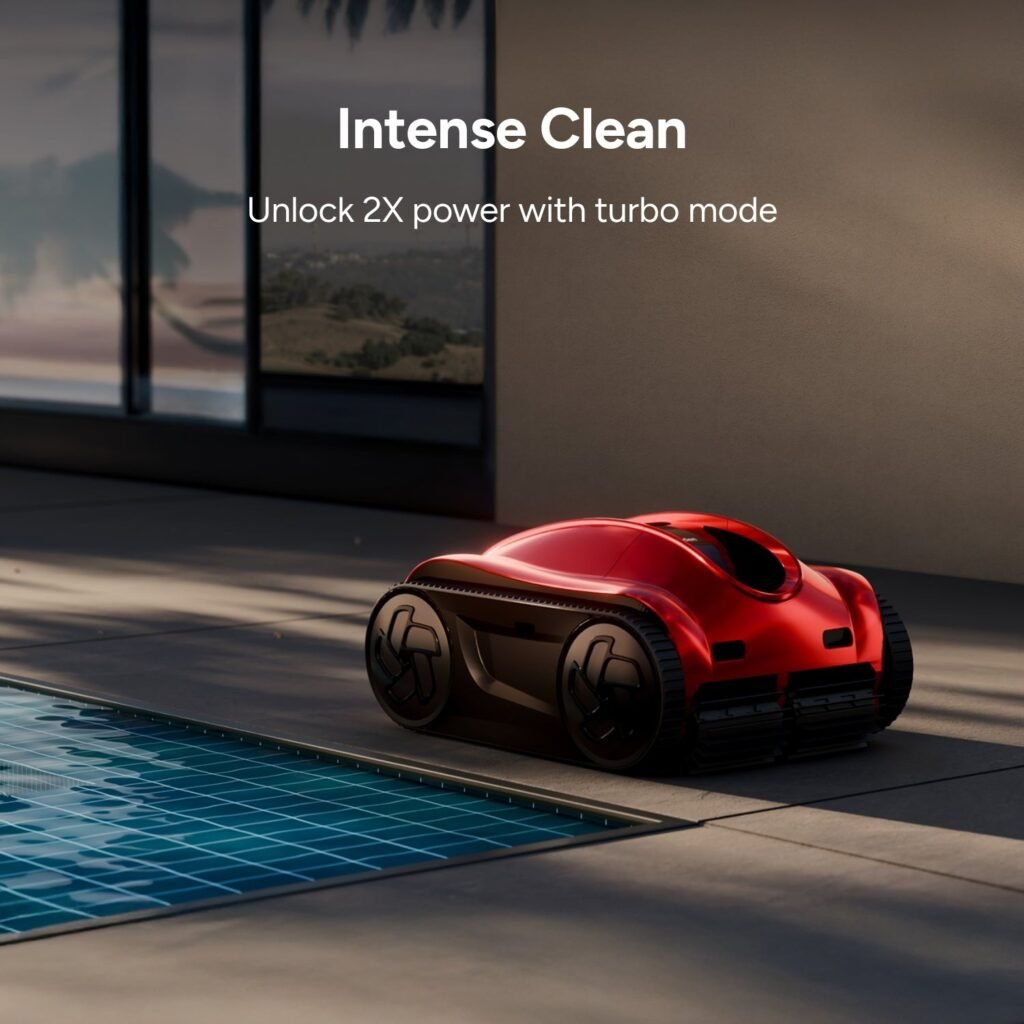
Cleaning coverage is where you should focus first. Some entry-level robots only clean the pool floor, which leaves walls and the waterline—where oils, sunscreen residue, and algae love to accumulate—untouched. A worthwhile machine should handle all three zones: floor, walls, and the waterline tile. Pay attention to how the robot transitions between surfaces. Models with strong traction systems and rear-mounted water jets tend to climb walls more reliably than those relying solely on suction grip, particularly on smooth tile or fiberglass surfaces.
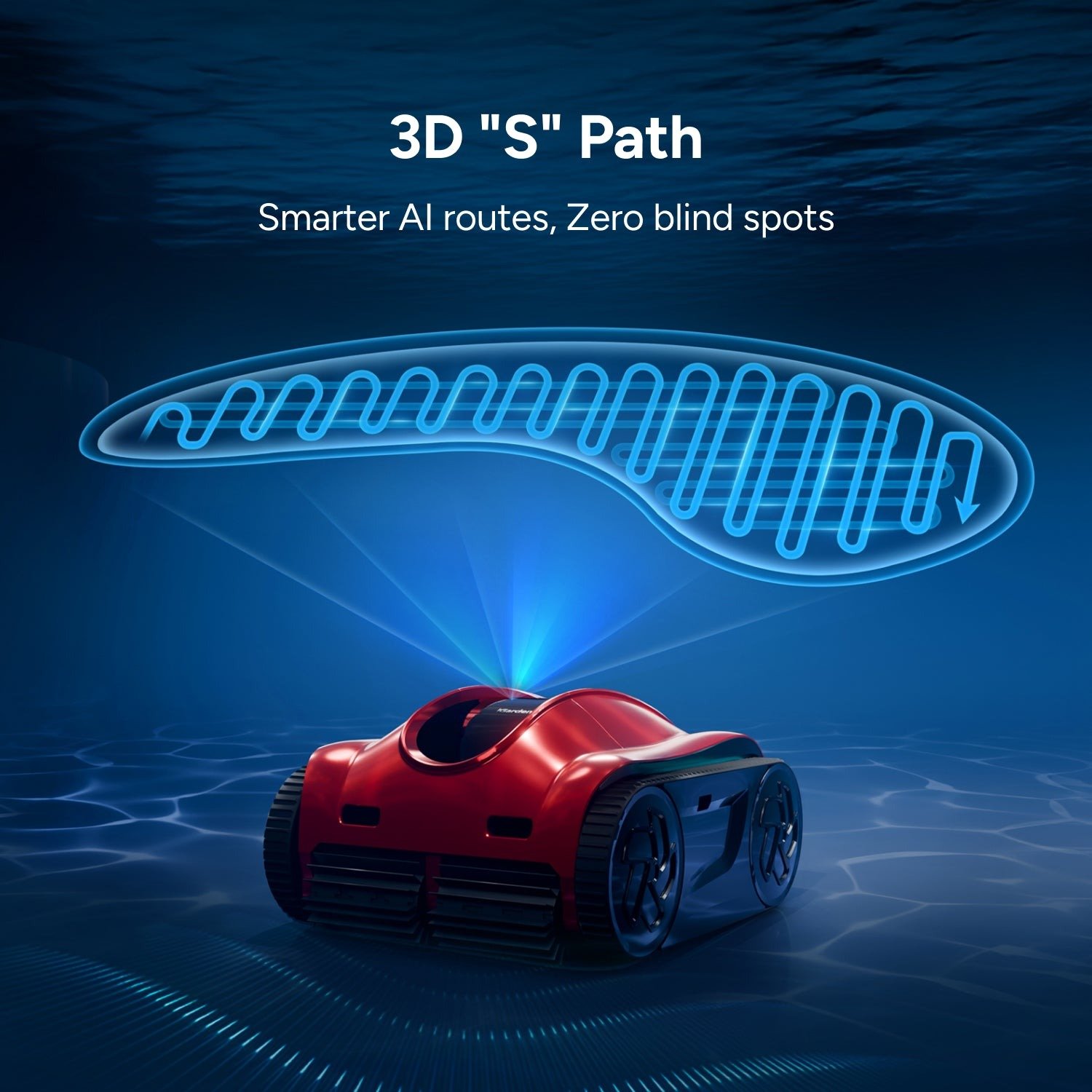
Navigation technology directly impacts how thoroughly your pool gets cleaned. Older or budget robots move in random patterns, bouncing off walls and hoping to eventually cover every square inch—a process that wastes time and energy while leaving blind spots. Smarter units use gyroscopic sensors or mapping algorithms to chart efficient, methodical paths across your pool. The difference is noticeable: a robot with intelligent scanning might finish a thorough clean in ninety minutes, while a random-pattern device could take three hours and still miss corners.
Brush type matters more than most beginners realize. Active scrubbing brushes that spin independently of the robot’s movement dislodge stubborn algae and biofilm far more effectively than passive rubber flaps. If your pool has a textured plaster surface, look for PVA foam brushes that grip and scrub uneven terrain. For vinyl or fiberglass pools, gentler rubber brushes prevent surface damage while still providing adequate agitation.
The robot’s internal filtration system determines what size particles it can capture. Fine-mesh cartridges that trap debris down to two microns will pull pollen, fine sand, and even some bacteria out of your water—essentially polishing it beyond what many main pool filters achieve. Top-loading filter access makes cleanup far simpler than bottom-loading designs, since you won’t need to flip the entire unit upside down after each cycle. Look for cartridges that rinse clean under a garden hose in seconds rather than requiring disassembly.
Convenience features round out your evaluation. A sufficiently long cable ensures the robot reaches every corner without pulling taut or dragging the power supply toward the water’s edge—measure your pool’s longest diagonal and add several feet as a buffer. An easy-lift handle or top-mounted grip saves your back when retrieving a water-logged machine. Programmable timers let you schedule cleaning sessions days in advance, so maintenance happens automatically without you remembering to initiate it.
Advanced Features for a Smarter Clean
Premium robotic cleaners now offer smartphone app connectivity, allowing you to start, stop, and schedule cleaning cycles from anywhere. Some apps even display real-time maps of your pool and show which areas have been cleaned. As smart home ecosystems like iGarden continue to expand into outdoor living spaces, the ability to integrate pool cleaning schedules alongside other automated yard and home routines makes managing your entire property more seamless. Obstacle detection sensors help the robot navigate around ladders, steps, and pool lights without getting stuck, reducing the frustration of finding your cleaner wedged in a corner mid-cycle. Multiple cleaning cycle options—such as a quick floor-only pass for light debris or an intensive full-pool scrub—give you flexibility based on how dirty the water actually is. For beginners, app control and obstacle avoidance are genuinely useful quality-of-life upgrades, while features like remote directional steering or voice assistant integration fall squarely into the “nice-to-have” category that you can comfortably skip without sacrificing cleaning performance.
The Crucial Role of Pool Filtration in a Healthy Pool
Your robotic cleaner handles the visible mess—leaves, dirt, algae—but your pool’s main filtration system is the unsung hero working around the clock to keep water safe and clear. Think of it this way: the robot is your deep-cleaning specialist that works in shifts, while the filtration system is the constant guardian circulating thousands of gallons daily, trapping microscopic contaminants that would otherwise turn your water cloudy or unsafe. These two systems complement each other beautifully. The robot removes the heavy burden of settled debris and scrubs surfaces clean, which means your main filter doesn’t clog as quickly or work as hard. In return, the filtration system handles the continuous circulation and fine particle removal that keeps water chemistry stable between robotic cleaning sessions.
Understanding the three main filter types helps you appreciate what’s already installed in your pool or guides you if you’re building from scratch. Sand filters push water through a bed of specially graded sand that traps particles down to about twenty microns. They’re low-maintenance and forgiving—you simply backwash them every few weeks by reversing water flow to flush out trapped debris. However, they offer the coarsest filtration of the three types, meaning very fine particles like pollen or sunscreen residue may pass through. Sand filters suit owners who want a hands-off approach and don’t mind slightly less crystal-clear water compared to other options.
Cartridge filters use pleated polyester fabric to capture particles down to ten or fifteen microns, providing noticeably clearer water than sand. Maintenance involves removing the cartridge every few weeks and hosing it down, with a deep chemical soak recommended every few months. They don’t require backwashing, which means no wasted water—a significant advantage in drought-prone regions. The tradeoff is that cartridges eventually wear out and need replacement, typically every one to two years depending on usage and debris load.
Diatomaceous earth (DE) filters deliver the finest filtration available, capturing particles as small as three to five microns. They use a powder made from fossilized organisms coated onto internal grids. The result is water that genuinely sparkles. However, DE filters demand the most attention: you’ll need to backwash periodically, recharge the system with fresh DE powder after each backwash, and disassemble the unit annually for a thorough grid cleaning. They’re ideal for owners who prioritize water clarity above all else and don’t mind the extra maintenance steps.
Choosing the right type comes down to three factors. First, consider your pool’s size and pump flow rate—each filter type has capacity limits, and an undersized filter forces your pump to work harder and shortens equipment life. Second, evaluate your environment. If your pool sits beneath trees that shed constantly, or you live in an area with heavy pollen seasons, a cartridge or DE filter handles the fine particle load better than sand. Third, be honest about your desired maintenance commitment. If you want the simplest routine possible and your robotic cleaner is already handling the bulk of physical debris, a sand filter paired with the robot’s fine-mesh internal cartridge may give you adequate clarity with minimal effort. If pristine, spa-like water is non-negotiable, a DE filter combined with your robot’s scrubbing power creates a powerful one-two punch that keeps your pool looking professionally maintained without hiring a service.
Your Step-by-Step Guide to Choosing and Using Your First Robotic Cleaner
Moving from research to action doesn’t have to feel intimidating. Breaking the process into manageable steps transforms what seems like a complex decision into a straightforward path toward cleaner water and reclaimed weekends.
Start by assessing your pool’s physical characteristics. Grab a tape measure and record the length, width, and depth at both the shallow and deep ends. Note the shape—rectangular pools are simplest for robots to navigate, while kidney or freeform designs require models with stronger navigation intelligence to handle curves and tight corners. Identify your pool’s surface material, whether it’s plaster, vinyl, fiberglass, or tile, since this determines which brush type will clean effectively without causing damage. Finally, take stock of obstacles: ladders, steps, in-pool benches, and lighting fixtures all influence how well a robot can maneuver.
Next, create a feature priority list that reflects your specific situation. If your pool is surrounded by mature trees, debris capacity and filtration fineness should rank high. If you have a large pool with complex geometry, invest in intelligent navigation over basic random-pattern models. Working within a tight budget? Prioritize floor-and-wall coverage and strong brushes over app connectivity—you can always upgrade later. Write down your top three non-negotiable features and use them as a filter when comparing options.
Research and comparison become much easier with your priority list in hand. Read owner reviews from people with pools similar to yours, paying attention to long-term reliability comments rather than just initial impressions. Watch video demonstrations to see how specific models handle wall climbing and corner navigation in real-world conditions rather than manufacturer-produced footage.
When your chosen robot arrives, resist the urge to rush. Unbox it on a flat surface and inspect the cable for any shipping damage. Fully uncoil and straighten the cord by laying it in direct sunlight for an hour—this removes coil memory and dramatically reduces tangling during operation. Connect the power supply in a dry, shaded area at least ten feet from the pool edge, and ensure the outlet has ground-fault circuit interrupter protection.
Develop a simple weekly routine that integrates your robot with broader pool care. Run the robotic cleaner two to three times per week for standard residential pools, or daily during heavy-use periods or pollen season. After each cycle, remove the filter cartridge immediately and rinse it thoroughly—allowing trapped debris to dry inside the cartridge makes it exponentially harder to clean. Once a week, inspect the brushes for wear and remove any hair or string wrapped around the rollers. Check your main filtration system’s pressure gauge at the same time; a reading eight to ten PSI above its clean baseline means it’s time to backwash or clean that filter too.
Troubleshooting common beginner issues saves you from unnecessary frustration. Cable tangling is the most frequent complaint—solve it by ensuring the cord is fully straightened before each use and by using a swivel cable if your model supports one. If the robot fails to climb walls, check that the filter isn’t full, since added weight and reduced suction compromise climbing ability. A robot that stops mid-cycle often indicates an overheated motor; confirm you’re not running it when water temperature exceeds the manufacturer’s recommended maximum. If it consistently misses one area, place it in the water facing that zone at the start of the cycle, giving the navigation system a head start on the problem region.
Beyond Cleaning: Essential Pool Maintenance Tips for New Owners
Your robotic cleaner handles the physical labor of scrubbing and vacuuming, but it can’t balance your water chemistry—and unbalanced water leads to cloudy pools, corroded equipment, and skin irritation regardless of how spotless your surfaces look. Think of your robot as the tool that frees up the time and energy you need to focus on these equally important chemical and mechanical tasks that keep your pool truly healthy.
Test your water at least twice a week using either liquid test kits or test strips, checking pH, total alkalinity, free chlorine, and cyanuric acid levels. Keep pH between 7.2 and 7.6—drift outside this range and your sanitizer becomes ineffective while surfaces deteriorate. Maintain total alkalinity between 80 and 120 parts per million to act as a buffer that prevents wild pH swings. Your sanitizer level, whether chlorine or bromine, needs to stay consistently within its effective range to kill bacteria and prevent algae from gaining a foothold. Shock your pool every one to two weeks, or after heavy bather loads and rainstorms, by adding a concentrated dose of oxidizer that destroys organic contaminants your daily sanitizer can’t handle alone.
Beyond chemistry, empty your skimmer and pump baskets weekly—clogged baskets restrict flow and force your pump to work harder, shortening its lifespan and reducing filtration efficiency. Backwash or clean your main filter according to its type and pressure gauge readings, not just on a calendar schedule, since debris accumulation varies with weather and usage. Because your robotic cleaner captures the bulk of physical debris before it reaches these systems, you’ll find your baskets stay cleaner longer and your filter pressure rises more slowly. This is the real hidden benefit of owning a pool robot: it doesn’t just clean surfaces, it reduces strain across your entire maintenance ecosystem, giving you a simpler, more manageable weekly routine that keeps everything running smoothly with less effort.
From Overwhelmed to Effortless: Your Path to Stress-Free Pool Ownership
Owning a pool should feel like a luxury, not a second job—and with the right approach, it absolutely can. A robotic pool cleaner is the single most transformative investment a new pool owner can make, automating the grueling physical work of scrubbing and vacuuming while delivering results that rival professional service. By focusing on the features that genuinely matter for your specific pool—cleaning coverage, intelligent navigation, effective brushes, and quality internal filtration—you avoid overspending on gimmicks and get a machine that performs reliably season after season.
Pairing your robot with the right main filtration system creates a comprehensive cleaning ecosystem where each component lightens the other’s workload. And by following a simple, structured routine—running your cleaner regularly, maintaining water chemistry, and staying on top of filter care—you’ll keep your pool consistently inviting without ever feeling overwhelmed. The knowledge you’ve gained here proves that mastering pool maintenance isn’t reserved for seasoned professionals. It’s entirely achievable with smart technology and a little understanding. So take the plunge, set up your routine, and start spending your weekends in the water instead of working beside it.