Lighting is one of the quiet forces behind a wedding film that feels polished, emotional, and easy to watch. It affects skin tones, mood, movement, detail, and the way each part of the day is remembered on screen. Budget decisions around affordable wedding cinematography still depend on practical details like coverage hours, venue conditions, and how well changing light is managed through the day. A beautiful film is not only about the camera or the location. It is also about noticing where the light is, how it changes, and how it can support the story.
Natural Light Sets the Tone Early
Many wedding films begin with preparation scenes, where natural light can make a major difference. Window light often creates a soft, flattering look during makeup, hair styling, dress details, and quiet moments with family. It can make a room feel calm without needing heavy equipment or staged setups.
The challenge is that natural light changes quickly. A bright morning room can become flat or shadowed by midday, depending on the weather and window direction. Videographers often look for clean light near windows, open doors, balconies, or shaded outdoor spaces. These areas help create footage that feels natural while keeping faces clear and colors balanced.
Ceremony Lighting Shapes the Emotional Core
The ceremony is usually the emotional center of a wedding film. Vows, ring exchanges, reactions, and processional moments all need clear visibility. Lighting helps viewers focus on expressions, not distractions.
Outdoor ceremonies can look beautiful, but harsh sunlight may create strong shadows under the eyes or cause people to squint. Late afternoon light is often softer, while midday sun can be harder to manage. Indoor ceremonies bring different concerns, including dim rooms, mixed lighting, candles, stained glass, or spotlights. A skilled approach balances the atmosphere of the space with the need to capture faces, movement, and meaningful reactions.
Golden Hour Adds Warmth and Depth
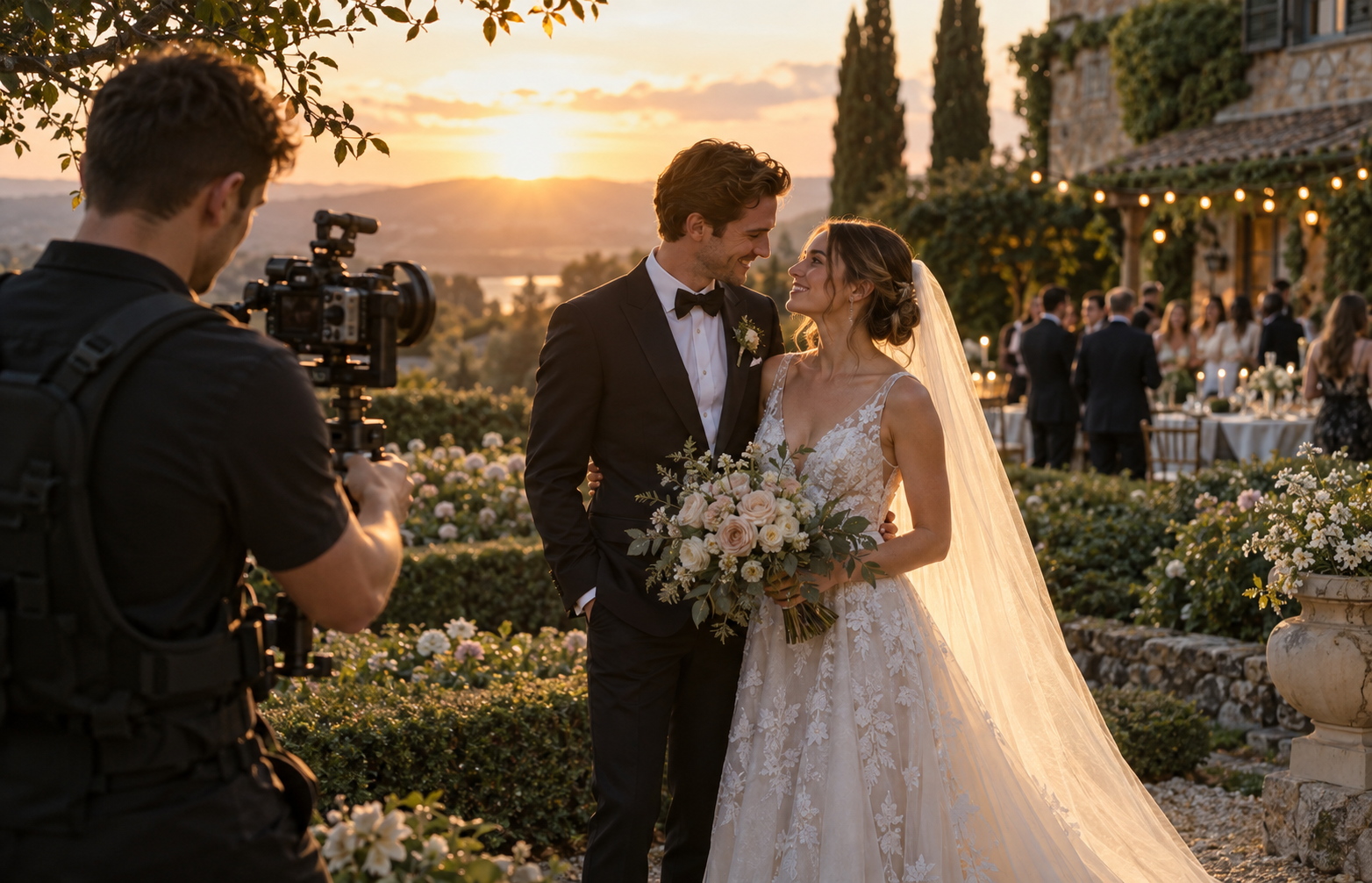
Golden hour, the period shortly after sunrise or before sunset, is valued because the light is soft, warm, and directional. In wedding films, it can add depth to couple portraits, walking shots, veil movement, and quiet landscape scenes. The light often feels romantic without needing much direction.
However, golden hour is short. A wedding timeline that leaves only a few minutes for video may limit what can be captured. Even a brief planned window can help create memorable footage. The key is coordination between the couple, photographer, videographer, and planner so the moment does not feel rushed.
Reception Lighting Creates Atmosphere
Receptions often have the most dramatic lighting changes of the day. Speeches, first dances, cake cutting, and open dancing may happen under dim lights, colored LEDs, candles, or moving DJ lights. These elements can create atmosphere, but they can also make filming more difficult.
Low light can introduce grain, blur, or uneven color if it is not handled carefully. Videographers may use camera settings, fast lenses, or discreet lighting to preserve the mood while keeping the image readable. Good reception footage should still feel like the real event, not a brightly lit studio. The goal is to maintain the energy of the room while capturing faces and movement clearly.
Color Temperature Affects the Final Look
Different light sources have different color temperatures. Daylight may look cool, candles may appear warm, and indoor bulbs can shift toward yellow, green, or orange. When several light sources mix in one space, skin tones and clothing colors can become difficult to balance.
This matters because wedding films rely heavily on consistency. A ceremony should not feel visually disconnected from portraits or reception footage unless that shift is intentional. Careful white balance, exposure, and color grading help create a film that feels cohesive from beginning to end.
Lighting Supports Storytelling
Lighting is not only technical. It also helps shape emotion. Soft light can make preparation scenes feel intimate. Backlighting can make a veil or dress glow. Dim reception lighting can make the dance floor feel energetic and alive. Clean ceremony lighting can keep attention on the couple’s expressions.
The best wedding films use light to support the day as it actually happened. They do not need every moment to look perfect in the same way. Instead, they need each scene to feel clear, honest, and connected to the atmosphere of the event.
Planning for Better Wedding Film Lighting
Couples do not need to manage lighting like professionals, but a few simple choices can help. Getting ready in a room with windows, avoiding harsh midday sun for portraits, allowing time for golden hour, and checking reception lighting plans can all improve the final film.
Lighting works best when it is considered early, not fixed later. Once the day begins, videographers adapt constantly to weather, rooms, timing, and movement. When good planning meets skilled observation, the result is a wedding film that feels natural, beautiful, and emotionally complete.