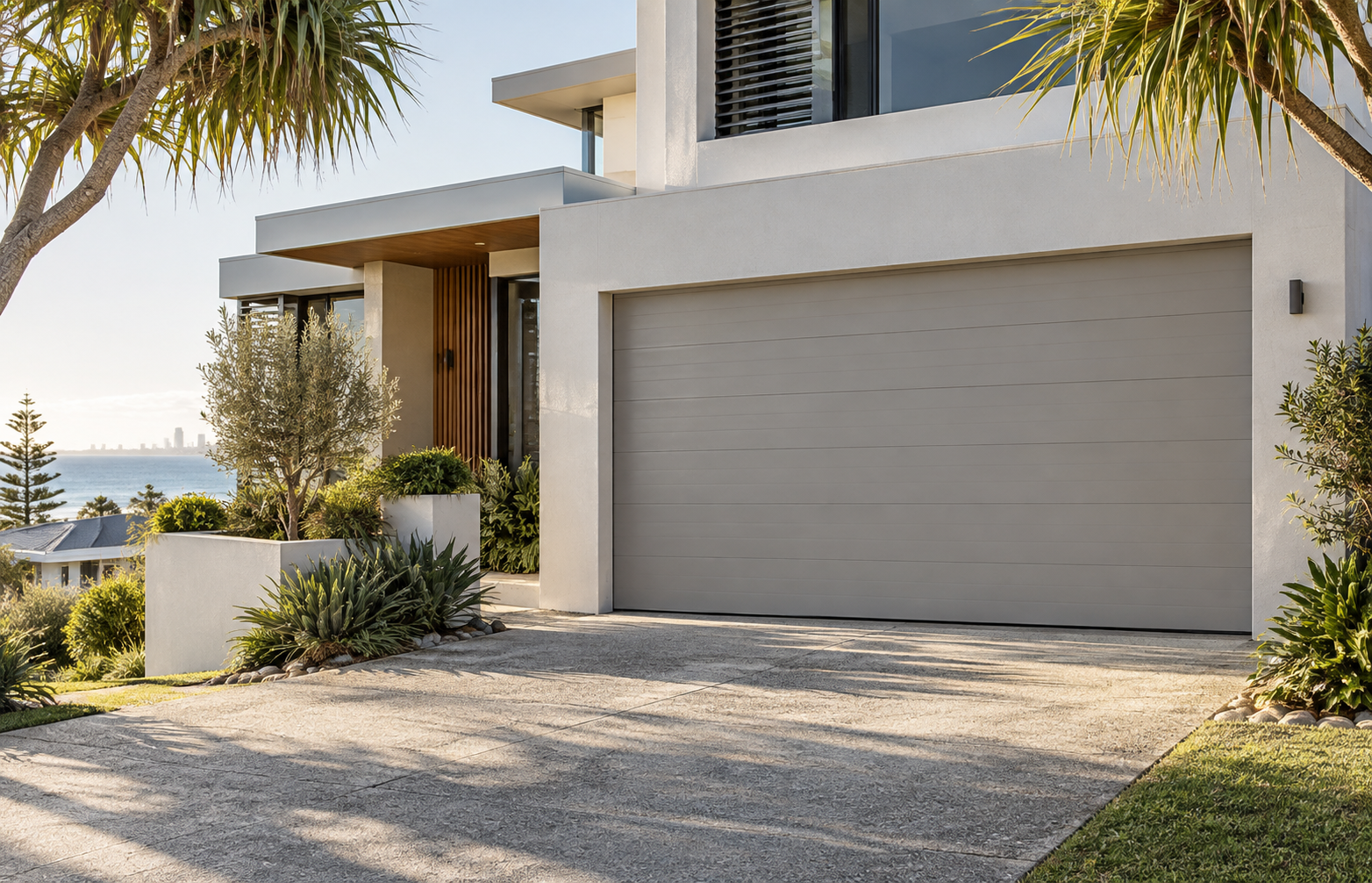
Coastal living has its perks, but it also asks more from the exterior parts of a house. A garage door is a big, moving surface that takes direct sun, wind gusts, salt-laden air, and sudden downpours. That combination can accelerate wear in places you might not notice at first: small chips in a finish, light surface corrosion on fasteners, or rollers that start to sound rough earlier than expected.
Choosing a style that works for your home’s look is important, but coastal performance is usually decided by the details: materials, coatings, hardware quality, and how well the door seals and moves in local conditions. For readers comparing profiles and finishes, common baselines for residential garage doors gold coast homes tend to include corrosion-aware materials and practical design choices that hold up to weather. With that context in mind, here’s how to select a garage door style that fits a coastal home and stays dependable over time.
Start With Your Home’s Facade and the Door’s Visual “Weight”
Garage doors can dominate a street-facing elevation, so their style should match the home’s proportions. Clean-lined, modern facades usually suit flat or lightly textured panel designs, while more traditional homes often look balanced with raised panels or subtle framing that echoes windows and trim.
Pay attention to visual “weight.” Dark colours and strong horizontal lines can make a door feel larger and more prominent, which may or may not be what you want. If your house already has strong architectural elements, a simpler door profile can prevent the frontage from looking busy. If the facade is plain, a door with a modest texture or a timber-look finish can add warmth without needing heavy ornamentation.
Understand How Door Types Affect Durability and Space
The main door style categories are often discussed as if they are only aesthetic, but the opening mechanism and track system can affect how the door behaves in wind, how well it seals, and how many moving parts need periodic attention.
Sectional doors (with multiple hinged panels that travel on tracks) are common because they suit many garage layouts and allow good headroom planning. Panel lift doors, a close cousin, lift in a smooth arc and can be configured for different ceiling heights. Tilt doors are simpler in construction but swing outward, which can be a drawback in tight driveways and can expose the door to gusts as it moves through that outward arc.
For coastal homes, it often helps to think in terms of control. Doors that move on guided tracks and seal consistently along the frame can reduce rattling and help limit wind-driven dust and moisture.
Choose Materials With Coastal Exposure in Mind
Salt air is persistent, and it finds every unsealed edge and scratched surface. Material choice is not just about the face of the door, but also the internal framework and fittings.
- Steel doors can be strong and stable, and modern coatings can perform well, but chipped paint and cut edges need attention. If you go with steel, look for durable factory finishes and be prepared for occasional touch-ups if the surface gets marked.
- Aluminium tends to resist corrosion well, which can be attractive near the ocean. It can also be lighter, which may reduce strain on springs and openers, though build quality still matters.
- Timber or timber-look options vary widely. Natural timber can be beautiful but usually requires more regular finishing to keep moisture and UV damage in check. Timber-look composite or coated products can offer a similar aesthetic with less ongoing upkeep, depending on the specific construction.
No matter the facing material, ask yourself what the door will look like after five summers of sun and a few seasons of storms. The best choice is often the one that still looks acceptable with normal, realistic maintenance.
Don’t Ignore Wind Exposure and Structural Feel
Wind is not only a “big storm” issue. Regular gusts can cause vibration and gradual loosening over time. A door that feels rigid, runs smoothly, and closes with an even seal generally handles exposure better than one that flexes or shudders during operation.
In practical terms, look for:
- A door that closes firmly without bouncing or reversing.
- Tracks and mounting points that feel substantial, not flimsy.
- Weather seals that compress evenly along the sides and bottom.
If your garage faces prevailing winds, the sealing and stiffness of the door can make a noticeable difference in day-to-day comfort, including how much grit and moisture end up inside.
Balance Quiet Operation With Reliable Hardware
Coastal homes often have living areas close to or above the garage. In those layouts, noise and vibration are not minor annoyances. Style choice can influence noise indirectly, because heavier doors may require more robust hardware, and poor balance amplifies sound.
Quieter operation usually comes down to a combination of:
- Smooth rollers and well-aligned tracks
- Correct spring balance
- A steady opener that doesn’t jerk the door at the start or end of travel
A door style that allows consistent tracking and even weight distribution can make it easier to achieve that smooth “glide” feeling.
Pick Finishes and Colours That Age Gracefully
Bright sun and reflected light off driveways can speed up fading and chalking. High-gloss finishes can show salt residue and water spotting more readily, while very dark colours may absorb heat and highlight surface imperfections.
For a low-fuss coastal look, mid-tones and textured finishes can be forgiving. If you love a bold colour, it can still work, but it’s worth choosing a finish system known for UV stability and planning for gentle cleaning rather than letting residue build up.
Set a Simple Maintenance Routine From Day One
A coastal-friendly garage door choice is only half the story. The other half is treating it like an exterior surface that needs basic care.
A practical routine includes rinsing or washing down the door and frame periodically, keeping tracks clear of grit, and using appropriate lubrication on moving components. It also helps to do a quick visual check a few times a year for small paint chips, early rust spots on fasteners, and seals that have started to harden or split.
That kind of light, consistent attention is often what separates a door that stays smooth for years from one that becomes noisy and finicky well before its time.