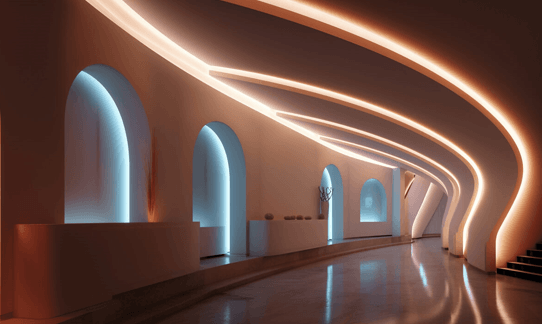
The Ultimate Guide to Project-Based LED Strip Lighting: Strategies for Commercial and Industrial Success

In the world of interior design and commercial construction, lighting has undergone a radical transformation. We have moved far beyond the days when a few overhead fluorescent tubes were sufficient to illuminate an office or a store. Today, lighting is an integral part of the architectural language. It defines paths, highlights textures, and creates the “vibe” that keeps customers in a store longer.
However, when you are managing a large-scale project—be it a 200-room hotel, a multi-story corporate headquarters, or a flagship retail outlet—standard retail LED strips often fall short. This is where “Project-Based LED Strip Lighting Solutions” come into play. These systems are designed for high-intensity use, long-term reliability, and seamless integration into building structures. This article will provide a comprehensive overview of how to plan, implement, and maintain professional-grade lighting systems that stand the test of time.
Understanding the Hardware: The “Professional” Difference
When you look at an LED strip, they all seem similar. But for project-based work, the internal construction is vastly different.
The Circuit Board (PCB) Foundation
A standard LED strip might use a thin, single-layer PCB. In a project environment, we use 2-layer or 3-layer PCBs with heavy copper traces. Why does this matter?
- Heat Management: Thicker copper draws heat away from the LED chips, preventing them from burning out prematurely.
- Physical Strength: During a complex installation where strips are pulled through tight corners or aluminum channels, a professional PCB won’t snap or lose its electrical integrity.
Seamless Light with COB Technology
One of the most common complaints in project lighting is “spotting”—the visible dots of light that look like a string of pearls. In modern high-end projects, designers now lean toward project-grade COB LED strip lights.
COB, or “Chip on Board,” technology places the LED chips so close together that they appear as one continuous line of light. This is a game-changer for projects involving reflective surfaces like marble floors or polished metal, where traditional “dotted” LEDs would create distracting reflections.
Strategic Planning for Commercial Spaces
Every project has a different objective. A project-based solution starts with identifying the “role” of the light.
Accent Lighting vs. Task Lighting
In a retail project, you need both. Accent lighting (under shelves, in coves) creates depth, while task lighting (inside display cases, above counters) ensures the product is visible in high detail. Project-based solutions allow you to mix and match different brightness levels (lumens per meter) while keeping the color temperature identical across the entire floor.
The “Long-Run” Challenge
In a large warehouse or a long hotel corridor, you might need to run 15 or 20 meters of light in a single line. With cheap strips, the light gets dimmer the further it goes—this is called “voltage drop.” Project-level engineering uses “Constant Current” technology to ensure that the 1st meter and the 20th meter are exactly the same brightness.
Application Scenarios: Where the Solutions Meet the Space
The Hospitality Sector (Hotels & Restaurants)
In hotels, lighting must be warm and inviting. Project solutions often utilize “Dim-to-Warm” strips. These mimic the cozy feel of old-fashioned light bulbs—as you dim them, the light becomes warmer and more orange, perfect for evening dining or bedside relaxation.
Corporate Offices
Modern offices are moving away from harsh “hospital white” light. By using high-quality linear strips embedded in the ceiling, designers create a “clean” look that reduces glare on computer screens. Furthermore, integrated lighting in breakout areas helps define different zones without needing physical walls.
Retail and Luxury Boutiques
In retail, color is everything. If a red dress looks slightly orange because of poor lighting, the customer might return it. Project-grade strips offer high Color Rendering Index (CRI), ensuring that colors are vibrant and true to life.
Installation Secrets: Getting the Professional Look
A project-based solution is 50% product and 50% installation. Here is how pros ensure a flawless finish:
- Aluminum Profiles are Mandatory: Never stick a strip directly to a surface in a commercial project. Using aluminum channels provides a heat sink and a mounting surface that ensures perfectly straight lines.
- Diffuser Selection: Depending on the project, you might choose a “milky” diffuser for a soft glow or a “clear” one for maximum brightness.
- Power Supply Placement: Professionals plan for access panels. You never want to hide a power driver behind a finished drywall ceiling where it can’t be serviced.
See also: What Is the Best SEO Service in Wooster for Long Term Business Growth?
Managing the Logistics of Large Projects
When you are ordering thousands of meters of LED strips, the logistics become a project in themselves.
Binning Consistency
The biggest nightmare for a project manager is receiving two batches of “Warm White” that look different. Project-based suppliers provide “Single-Bin” solutions. This means every single reel of LED strip comes from the exact same manufacturing batch, ensuring 100% color harmony across the entire building.
Customized Lengths
To save time on-site, many projects now order “pre-cut” lengths. This reduces waste and significantly speeds up the installation process, as the electrical team doesn’t have to spend hours measuring and soldering on the job site.
If you are looking for specific technical data on how these strips are manufactured for long-term project use, you can visit the product specifications directly here: https://www.signliteled.com/products/cob-led-strip-lights/
The Long-Term ROI (Return on Investment)
While project-grade lighting costs more upfront than “budget” options, the savings over 5 years are massive.
- Lower Maintenance Costs: In a commercial building, the cost of the labor to change a light is often higher than the light itself. High-quality strips fail less often, saving thousands in maintenance.
- Energy Efficiency: Professional strips produce more light (lumens) for every watt of electricity used. Over a 50,000-hour lifespan, the electricity savings can pay for the entire lighting system.
- Property Value: Good lighting makes a space look expensive. Whether it’s a rental office or a luxury home, the visual appeal of professional linear lighting adds tangible value to the real estate.
Future-Proofing with Smart Controls
Modern building projects are now “Smart.” Project-based LED solutions are designed to be compatible with systems like DALI, Lutron, and even voice-controlled industrial systems.
- Daylight Harvesting: In large offices, sensors can detect how much sunlight is coming through the windows and automatically dim the LED strips to save energy while maintaining a perfect light level.
- Zoning: You can group different areas of a store or office together, allowing the manager to change the “scene” for different times of the day (e.g., “Cleaning Mode,” “Business Hours,” and “Night Security”).
Common Pitfalls to Avoid
Even with a great product, projects can go wrong. Here are the top three mistakes:
- Poor Power Calculation: Using a power supply that is exactly the same wattage as the strips. Pros always leave a 20% “headroom” to prevent the driver from overheating.
- Wrong IP Rating: Using indoor strips in a “damp” area like a gym or a kitchen, leading to short circuits.
- Visible Wiring: Not planning the wiring “chases” early in the construction phase, resulting in ugly wires showing at the end of the run.
Conclusion: Lighting as a Foundation of Success
A project-based LED strip lighting solution is more than just a purchase—it’s a commitment to quality. By choosing the right hardware, planning for consistency, and focusing on professional installation, you turn a simple light source into a powerful architectural tool.
Whether you are designing a sleek modern office or a cozy boutique hotel, the right linear lighting provides the “soul” of the space. It guides the eye, sets the mood, and ensures that the physical environment reflects the quality of the brand or business it houses. When you invest in project-grade solutions, you aren’t just buying lights; you are buying peace of mind and long-term beauty.