Outdoor areas in Australia take a lot of punishment from the sun. UV levels sit in the extreme range for much of the year across most of the country, and temperatures in summer make uncovered spaces difficult to use for large parts of the day. Shade sails have become a practical and widely adopted response to this.
They are tensioned fabric canopies stretched between anchor points to create overhead coverage without the weight or cost of a permanent roofed structure. Sunsoft Shade Systems has been installing them across residential, commercial, and public sites for decades, which gives a sense of how well the format has held up over time.
What Is a Sunshade Sail
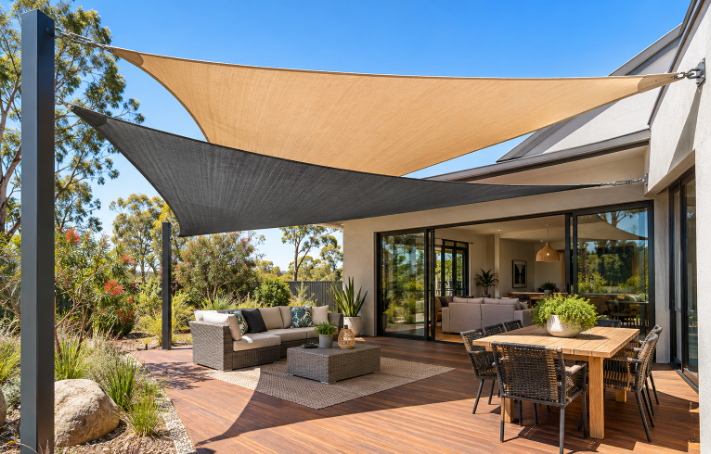
A sunshade sail is a length of UV-resistant fabric pulled taut between fixed attachment points. Those points can be purpose-built steel posts, existing walls, fences, or structural columns. The tension is what keeps the sail rigid and gives it that clean, geometric appearance. Most are installed at an angle rather than flat, which helps water run off and also allows the sail to move in wind without putting excessive strain on the fixings.
The fabric itself is usually a knitted polyester mesh engineered to block UV radiation. Higher-grade products block upwards of 95% of UV while still allowing air to circulate underneath.
Shapes and Sizes
Triangle sails are the most common starting point for residential installations. They suit smaller areas well, and multiple triangles can be layered or arranged to cover larger irregular spaces.
Square and rectangular sails cover more ground with fewer anchor points and are typically the preferred format for commercial sites, school playgrounds, pool areas, and public outdoor spaces.
For more complex sites, sails can be fabricated in custom shapes to match unusual building footprints or to maximise shade at specific times of day. This kind of work requires a design process that accounts for sun angles, wind direction, and load distribution across the structure.
Shade Cloth vs Waterproof PVC Fabric
Standard shade cloth is breathable. Rain passes through it, but UV and direct sun are largely blocked. It is the right choice for most outdoor areas where the goal is sun and heat reduction rather than full weather protection.
Waterproof PVC-coated fabric serves a different purpose. It keeps rain out entirely and is commonly used in hospitality settings, alfresco dining areas, and anywhere people need to remain outside regardless of the weather. It does reduce airflow, so it tends to feel warmer underneath on hot days compared to shade cloth.
The choice between them comes down to how the space is used and in what seasons.
Posts, Permits and Structural Requirements
A shade sail is not just a piece of fabric held up with pegs. The loads acting on the structure, particularly during high-wind events, are significant. Posts are typically set between 900mm and 1,200mm into the ground with concrete footings.
In Victoria and most other Australian states, any shade structure covering more than 10 square metres requires a building permit and must be installed by a Registered Building Practitioner holding public liability and works insurance. This applies to both residential and commercial sites. Skipping this step creates legal and safety risks that are worth understanding before work begins.
For schools and childcare facilities, there are additional requirements. WorkSafe and the Victorian Education Department mandate annual safety audits of shade structures, with a structural engineering review required every three years.
Maintenance and Expected Lifespan
A properly installed shade sail that receives basic upkeep will typically last between eight and ten years. The main tasks are keeping the fabric clean to prevent mould and UV degradation, checking tension periodically, and inspecting fixings and anchor points after severe weather.
Sails that are left slack will fail faster. Loose fabric flaps in the wind, which causes stress fractures in the weave and puts excessive strain on the corners where the attachment hardware connects.
Choosing the Right Installer
The core question is whether the installer is qualified to handle the full scope of work. That includes design, engineering sign-off where required, council permits, fabrication, and installation. For anything beyond a small domestic sail, it is worth confirming the installer holds the relevant registrations and can provide documentation on request.
Most established installers offer a site measure and quote before any commitment is required, which gives a straightforward way to assess the work involved and get an accurate cost before making a decision.