Synthetic grass has come a long way from the artificial turf of decades past. Today’s products look and feel closer to natural lawn than most people expect, and they’re showing up in backyards, rooftops, commercial courtyards, and even indoor spaces. Before jumping into a project, though, it helps to understand what the installation process actually involves and what separates a well-done job from one that causes problems down the track.
For anyone weighing up their options, resources like this guide on synthetic grass installation can offer useful context on what a professional approach typically looks like and what questions to ask before committing to a product.
What Synthetic Grass Is Actually Made Of
Most modern synthetic grass is made from polyethylene fibres, polypropylene, or a blend of both. Polyethylene tends to feel softer and is more commonly used in residential lawns. Polypropylene is firmer and typically found in commercial settings where durability over appearance is the priority.
The backing material matters just as much as the fibres. A quality backing holds the grass blades in place, resists UV degradation, and allows water to drain through at a reasonable rate. Poor drainage is one of the most common complaints about budget installations, and it almost always comes down to the backing or the base preparation underneath.
How the Base Layer Affects the Final Result
The base layer is what most people overlook when budgeting a synthetic grass project. It’s not visible once the grass is laid, but it determines how the surface feels underfoot, how well it drains, and how long it lasts.
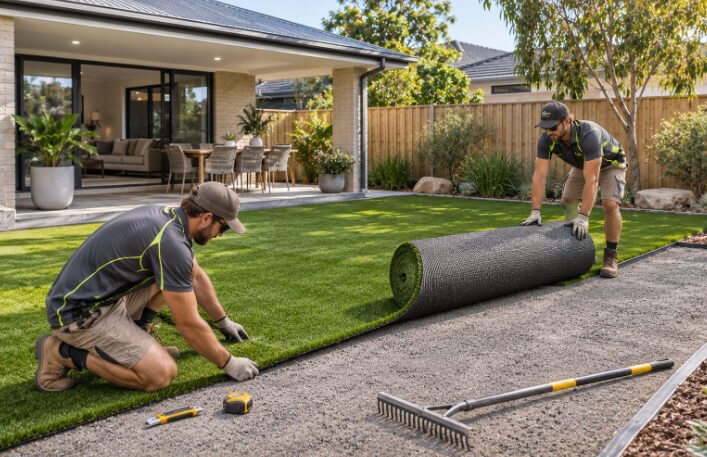
A properly prepared base typically involves removing the existing soil or grass to a set depth, compacting the ground, then laying a layer of crushed rock or decomposed granite. This layer gets compacted again before the grass goes on top. Skipping or cutting corners on this step is one of the most common reasons synthetic lawns develop bumps, soft spots, or drainage issues over time.
Weed matting is usually placed between the base layer and the grass to prevent growth coming through from below. Not all weed membranes perform equally, and thinner ones can break down and allow penetration within a few years.
Measuring and Cutting for a Clean Finish
Synthetic grass typically comes in rolls of a fixed width, most commonly between 3.75 and 4 metres. Larger areas require multiple rolls joined together, and the placement of those joins is something worth thinking about carefully.
Joins should run parallel to the main direction of the grass pile and ideally fall in low-traffic or less visible areas. When done well, seams are barely noticeable. When done poorly, they’re obvious and can lift over time.
Accurate measurement matters more than people assume. Cutting on the wrong side of a line or misreading the pile direction can waste a significant amount of material, particularly on irregular-shaped areas.
Infill Materials and Why They Matter
Most synthetic grass products are designed to be used with an infill material brushed into the fibres. This isn’t always obvious from looking at the product, but infill does several important things: it helps the blades stand upright, adds a cushioning effect, and stabilises the backing against movement.
Silica sand is the most common infill choice. It’s affordable, widely available, and works well in most residential applications. Rubber crumb is used in sports applications where impact absorption is a priority. Some newer installations use organic infill materials like cork or zeolite, which have benefits around temperature and odour control.
Temperature and Pet Considerations
Synthetic grass can get noticeably hot in direct sun during warmer months. This is worth factoring in if the area will be used heavily in summer or if young children will be playing on it regularly. Lighter coloured grass tends to absorb less heat than darker varieties.
For households with pets, drainage and odour resistance become more important factors in product selection. Some grasses are specifically designed with antimicrobial properties and enhanced drainage for pet use. Regular rinsing helps maintain hygiene regardless of which product is used.
Understanding Product Warranties
Synthetic grass warranties vary widely between manufacturers and suppliers. Most quality products carry a warranty of between 8 and 15 years against UV fading and fibre breakdown. What the warranty actually covers, and what voids it, is worth reading carefully before purchase.
Installation warranties, if offered separately, typically cover workmanship rather than materials. Keeping records of the product batch and installation date is useful if a warranty claim ever needs to be made.