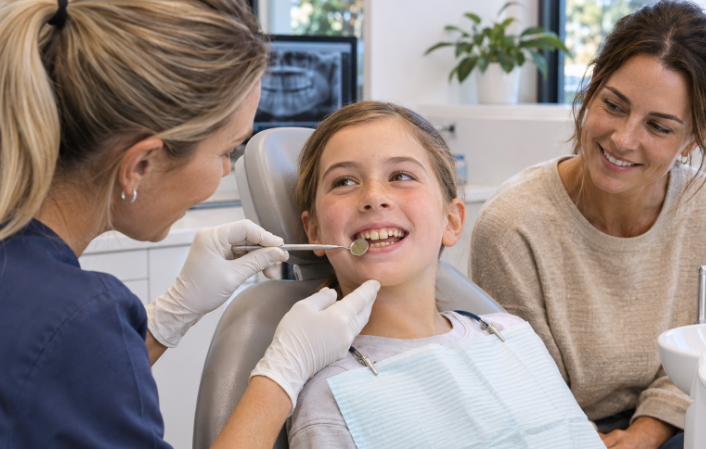
Crowded teeth are common during childhood, especially as permanent teeth begin replacing baby teeth and the shape of the dental arches continues to develop. Parents may notice teeth overlapping, erupting at unusual angles or appearing to have too little room, but appearance alone cannot show how significant the problem is. For families considering braces for kids hawthorn, an orthodontic assessment can help determine whether crowding needs treatment now, monitoring as the child grows, or attention at a later stage. Early assessment does not automatically mean a child will be given braces immediately. The appropriate approach depends on how the teeth, bite and jaws are developing.
What Does Dental Crowding Mean?
Dental crowding occurs when there is not enough suitable space for teeth to align normally within the dental arch. Permanent teeth may overlap, rotate, emerge outside the expected position or struggle to erupt fully.
Crowding varies considerably. A small amount of irregularity around newly erupting front teeth may look dramatic to a parent but may not require immediate treatment. In other cases, insufficient space can affect how permanent teeth emerge and how the upper and lower teeth fit together.
Orthodontists therefore assess more than how straight the visible teeth appear. They consider available space, tooth position, eruption patterns, the bite and the relationship between the jaws.
This broader assessment is important because two children with apparently similar crowded front teeth may require very different management.
Why Do Some Children Develop Crowded Teeth?
Crowding can develop for several reasons, and there is rarely one simple cause.
The size of the teeth relative to the available space in the dental arches can be a major factor. Jaw growth and inherited dental characteristics may also influence how much room permanent teeth have as they erupt.
The timing of baby-tooth loss can matter too. According to guidance from the American Academy of Pediatric Dentistry, premature loss of primary teeth can sometimes reduce available arch space and contribute to developing crowding. Teeth may shift into an empty area before the permanent replacement is ready to emerge.
Other dental development issues can also affect available space or eruption. For example, a permanent tooth may emerge in an unusual position or follow a path that makes normal alignment more difficult.
Because these factors are not always visible at home, an examination may sometimes include photographs, measurements or dental imaging where clinically appropriate.
Signs Parents Might Notice
Crooked or overlapping teeth are the most obvious signs of crowding, but parents may notice other changes as permanent teeth appear.
A new tooth might erupt behind or in front of neighbouring teeth rather than neatly between them. Teeth may appear rotated, or a permanent tooth may seem to be taking unusually long to emerge after a baby tooth is lost.
Crowding can also make cleaning more difficult because toothbrush bristles and floss may be harder to position between overlapping teeth. Maintaining good oral hygiene remains important while the child’s teeth are developing, regardless of whether orthodontic treatment is planned.
Parents should avoid trying to judge treatment need solely from photographs or comparisons with other children. Growth and tooth eruption occur at different rates.
A general dentist may identify developing concerns during routine appointments and suggest an orthodontic assessment. Parents can also seek an assessment directly if they have concerns about tooth position or the bite.
Early Assessment Does Not Always Mean Early Braces
One common misconception is that visiting an orthodontist during primary school means treatment must start immediately.
Orthodontics Australia recommends a first orthodontic assessment from around age seven. At this stage, many children have a mixture of baby and permanent teeth, allowing the orthodontist to observe developing alignment and bite relationships.
For many children, the most appropriate outcome is simply monitoring. The orthodontist may recommend periodic reviews while waiting for additional permanent teeth to erupt or for further jaw growth.
Early treatment may be considered when a particular developing problem could benefit from intervention at that stage. Depending on the issue, treatment does not necessarily involve full braces. Different orthodontic appliances or space-management approaches may sometimes be considered.
Even when early treatment is used, further orthodontic treatment can still be required later once more permanent teeth have appeared.
How Treatment Decisions Are Made
There is no single age at which every child with crowded teeth should begin treatment. Decisions are based on the individual pattern of dental development.
An orthodontic assessment may consider how much crowding is present, which permanent teeth have erupted, whether other teeth have enough space to emerge, jaw relationships and any accompanying bite problems. The child’s remaining growth can also influence timing.
Treatment options vary according to those findings. Some children may only need observation for a period, while others may eventually receive braces, expansion or another orthodontic approach. Removing teeth purely to create space is also not a decision made from appearance alone. Professional guidance recommends detailed space analysis and a broader treatment plan before extractions are considered for orthodontic crowding.
For parents, the useful question is therefore not simply whether the teeth look crowded. It is whether their position is affecting normal dental development and whether there is an advantage to acting at a particular stage. An appropriate assessment can distinguish changes that need attention from those that can safely be watched as the child’s permanent teeth and jaws continue to develop.