TL;DR: Gray beard hair takes dye differently than head hair because it’s coarser and more resistant to pigment, but henna beard dye handles it without the ammonia or PPD found in boxed chemical dyes. EarthDye henna covers gray in one application, needs about 2-4 hours of mix time plus 1-3 hours on the beard, and lasts 4-6 weeks before a touch-up. The steps below cover mixing, application, timing, and the two mistakes that ruin most first attempts in 2026: rushing the dye release and rinsing with shampoo too soon.
Gray beard hair is more resistant to any dye, chemical or natural, because the hair shaft has lost pigment and hardened with age. Henna works differently than PPD-based dyes — it doesn’t strip the hair to deposit color, it coats the shaft with lawsone, the red-orange pigment from the Lawsonia inermis plant. That means the process takes longer than a 20-minute box dye, but it also means no ammonia fumes, no metallic salts, and no PPD, which the American Contact Dermatitis Society named Allergen of the Year in 2006 for its role in cosmetic allergic reactions. Here’s the full method for gray beard coverage at home.
What You’ll Need
- EarthDye henna powder (enough for beard length — a full beard needs less than a full head of hair)
- A non-metal mixing bowl (glass or plastic; metal bowls can affect dye release)
- A wooden or plastic spoon
- An acidic liquid to activate the dye — warm water works, some people use diluted lemon juice for faster release
- Plastic or nitrile gloves
- An old towel or cape to protect clothing
- Petroleum jelly or oil for the skin edge around the beard line
- A shower cap or plastic wrap to keep the mix warm while it develops
- A timer
Step 1: Mix the Henna Paste
Combine EarthDye henna powder with warm water in the glass or plastic bowl until you get a texture like yogurt or thick mud — not runny, not dry and crumbly. Getting the consistency right matters because a paste that’s too thin drips and stains skin, while one that’s too thick won’t spread evenly through beard hair. Stir until there are no dry clumps, cover the bowl with plastic wrap, and set it somewhere warm for the dye release period. Expect the paste to darken from bright green to a deeper brown as the lawsone releases — that color shift is the sign the mix is ready to use.
See also: Why a Likable Person Test Will Help You Change Your Life
Step 2: Let the Dye Release
Henna needs time before application because the lawsone molecule isn’t fully active the moment powder meets liquid. Skipping this step is the single most common reason people say henna “didn’t work” on gray hair. Leave the covered paste at room temperature for 2 to 4 hours — some people push it to 8 hours for stronger gray coverage, since the coarser texture of beard hair benefits from a fully released dye. You’ll know it’s ready when the surface smells earthy rather than grassy and the color has gone from green to a rusty brown.
Step 3: Protect Skin and Clothing
Before touching the paste to your face, apply a thin layer of petroleum jelly or oil along the hairline where beard meets skin. This step matters because henna stains skin on contact and can leave an orange tint on the jawline for several days if you skip the barrier. Drape a towel or old cape over your shoulders, and pull on gloves — henna will stain fingernails and skin on hands too if left unprotected for the full application time.
Step 4: Apply the Henna Paste to the Beard
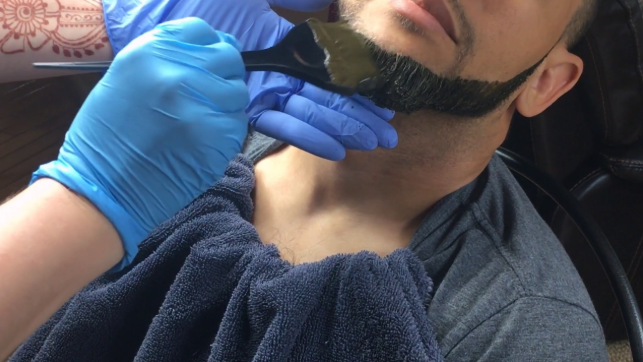
This is the step that determines your gray coverage, so it deserves the most attention. Section the beard the way you would for trimming — chin, cheeks, mustache, and neckline separately — and work the paste in with your gloved fingers or a tint brush, making sure every gray strand gets fully saturated rather than just the surface. Gray hair is more resistant to pigment uptake than pigmented hair, so pack the paste on generously rather than sparingly; a thin layer will leave patchy, lighter gray coverage while a thick, even coat gives the more uniform auburn-to-brown result people expect from henna beard dye. Once the beard is fully coated, pull a shower cap over the area or wrap it loosely in plastic wrap to hold in body heat, which speeds up the color deposit. Set a timer for 1 to 3 hours depending on how much gray you’re covering — heavier gray needs the longer end of that range, since white and gray hair takes color more slowly than hair with any remaining pigment. Check a small test section at the 1-hour mark by wiping paste off a few strands near the chin; if the color underneath looks pale or greenish rather than orange-brown, leave the rest on longer. Full beards with more than 50% gray often need the full 3 hours for even, opaque coverage rather than a translucent tint.
Step 5: Rinse Without Shampoo
Rinse the paste out with warm water only, working it out gradually rather than trying to remove it all in the first minute. Using shampoo at this stage strips the henna before it has fully bonded to the hair shaft, which shortens how long the color lasts and can leave the result patchy. Expect the water to run reddish-brown for several minutes — that’s normal and doesn’t mean the dye is washing back out. Once the water runs mostly clear, towel dry with a dark towel to avoid staining lighter fabric.
Step 6: Let Color Oxidize for 24-48 Hours
Henna color continues to develop and darken for one to two days after rinsing as the pigment oxidizes on contact with air. Avoid shampoo, oils, or additional water exposure during this window if possible, since the color is still setting. Beards often look brighter orange-red immediately after rinsing and settle into a deeper auburn or brown tone by day two — this is expected and not a sign of a failed dye job.
Common Mistakes and Fixes
- Paste applied too thin: Gray strands look faded or patchy instead of solid — redo the application with a thicker, fully saturated coat next time.
- Not enough dye release time: Color barely shows on gray hair — extend the paste’s covered rest period closer to 4 hours before your next application.
- Rinsing with hot water immediately: Color looks duller than expected — rinse with lukewarm to cool water instead, since heat can affect how the pigment sets.
- Shampooing right after rinsing: Color fades fast within a week — wait the full 24-48 hours before any shampoo use.
- Uneven color on mustache vs. cheeks: Usually means the mustache area got less paste — apply extra there since it’s harder to saturate evenly with a brush.
Tools and Resources
- EarthDye henna hair dye — plant-based, free of PPD, ammonia, and metallic salts, the base product for the method above.
- Glass or plastic mixing bowl — avoids the metal reaction that can dull dye release.
- Nitrile gloves — standard drugstore item, protects hands from staining during the 1-3 hour application window.
- Petroleum jelly — a barrier for skin around the beard line, prevents staining on the jaw and neck.
FAQ
Does henna beard dye look natural on gray hair?
Yes, though the result leans auburn-to-brown rather than jet black, since henna is a single reddish-brown pigment rather than a mixed chemical color system. EarthDye henna tends to give the most natural-looking result on lighter gray or salt-and-pepper beards; very white beards will show a stronger auburn cast.
How long does henna beard dye last before it fades?
Expect 4 to 6 weeks of solid color before gray starts showing at the roots again, longer than most chemical beard dyes which fade within 2 to 3 weeks.
Can I use henna beard dye every week?
There’s no chemical buildup risk with henna the way there is with PPD dyes, so reapplying every 4-6 weeks as regrowth shows is the typical schedule rather than weekly use.
Is henna beard dye safe for sensitive skin?
Henna avoids the PPD and ammonia that trigger most reported cosmetic hair dye allergies, which is why EarthDye markets its henna as hypoallergenic — though anyone with a known plant allergy should still patch test 48 hours before a full application.
Will henna beard dye stain my skin?
Temporarily, yes — the petroleum jelly barrier in Step 3 is there specifically to reduce staining at the beard line, and any minor staining on skin fades within a few days on its own.
Conclusion
EarthDye henna remains the most straightforward way to cover a gray beard without introducing PPD, ammonia, or metallic salts into a daily grooming routine. The process takes longer than a box dye — plan for a few hours of dye release plus 1-3 hours of application — but the payoff is 4-6 weeks of coverage from a single henna beard dye session with no chemical fumes involved. Get the paste consistency and dye release time right in 2026 and the rest of the process is closer to a grooming ritual than a chore.