Introduction
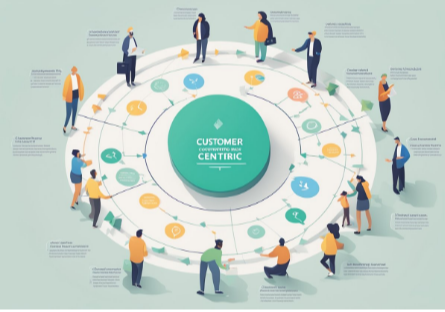
The shift towards customer-centric business models represents one of the most significant transformations in modern commerce. As markets have become more competitive, customers more informed, and switching costs lower, businesses can no longer rely on product superiority or distribution dominance alone. The organisations that win in today’s economy are those that place the customer at the absolute centre of everything they do — from product design and pricing to service delivery and corporate culture. This article explores what customer-centricity means in practice and how it creates durable business success in competitive environments like Hong Kong.
Defining Customer-Centricity
A customer-centric business model is one where every key decision is made with the customer’s needs, preferences, and long-term satisfaction as the primary criterion. This goes far beyond having a good customer service team — it means involving customers in product development, designing operations around customer convenience, measuring success through customer outcomes rather than internal metrics, and creating a culture where every team member understands how their work affects customer experience.
Customer-centric companies ask fundamentally different questions. Not: how do we reduce our cost to serve? But: how do we improve our value to the customer? Not: how do we increase our margin on this transaction? But: how do we maximise the lifetime value of this relationship?
The Business Case for Customer-Centricity
The commercial case for customer-centricity is compelling and well-evidenced. Research consistently shows that customer-centric companies outperform their peers on revenue growth, profitability, and shareholder returns. They enjoy lower customer acquisition costs through referrals and word-of-mouth, higher customer lifetime values through loyalty and expanded purchasing, and greater resilience through economic downturns because of the depth of customer relationships they have built.
Acquiring a new customer costs five to seven times more than retaining an existing one, and increasing customer retention rates by just five percent can increase profits by 25 to 95 percent. These numbers make the financial case for customer-centric investment extraordinarily powerful.
Understanding Your Customers Deeply
Customer-centricity requires genuine, deep customer understanding — not surface-level demographic data or anecdotal feedback, but a rich, nuanced picture of what customers value, what frustrates them, how they make decisions, and what success looks like from their perspective. This understanding is developed through multiple channels: systematic customer research, regular customer interviews and advisory boards, front-line employee insights, customer journey mapping, and sophisticated analysis of behavioural data.
For businesses serving Hong Kong’s multicultural market, customer understanding must account for significant variation in preferences, communication styles, and decision-making processes across customer segments. What works for one demographic group may not work for another, and customer-centric companies invest in understanding these differences and responding to them appropriately.
Designing for Customer Experience
Customer experience design is the discipline of systematically creating interactions that deliver maximum value and satisfaction at every touchpoint — from first awareness through purchase, onboarding, ongoing use, and support. It requires mapping the complete customer journey, identifying moments of friction and delight, and designing deliberate improvements based on customer data.
The most customer-centric companies treat their customer experience as a core competitive asset, investing as much in its design and continuous improvement as they do in product development. They establish cross-functional teams responsible for the end-to-end customer journey, breaking down the departmental silos that often create fragmented and inconsistent customer experiences.
Measuring and Improving Customer Satisfaction
What gets measured gets managed. Customer-centric businesses track a suite of customer satisfaction metrics — including Net Promoter Score, Customer Satisfaction Score, Customer Effort Score, and customer lifetime value — and use these data to drive continuous improvement. They close the feedback loop by sharing customer insights across the organisation and ensuring that improvement actions are taken and their impact monitored.
In Hong Kong’s competitive consumer market, where customers have abundant alternatives and are highly vocal on social media and review platforms, monitoring and responding to customer feedback in near-real-time has become a basic requirement for maintaining reputation and share.
Customer-Centricity in Hong Kong
Hong Kong’s consumer market is highly sophisticated and demanding. Customers expect excellent service quality, genuine product performance, and businesses that understand their specific needs. The city’s online review culture and highly connected social networks mean that negative customer experiences travel fast and far. When you set up a company in Hong Kong, embedding customer-centricity from the start is not just a nice-to-have — it is a commercial necessity.
The most successful Hong Kong businesses — from premium retailers to financial services firms to tech startups — have built their competitive positions on the foundation of exceptional customer understanding and experience delivery. They invest continuously in customer insight, empower front-line staff to resolve issues immediately, and treat every customer complaint as a valuable signal about where they can improve.
Conclusion
Customer-centricity is not a strategy — it is a philosophy that must permeate every aspect of the organisation. Businesses that genuinely place the customer at the centre of their decision-making build the kind of loyal, engaged customer bases that sustain competitive advantage across business cycles and market disruptions. In markets as competitive and demanding as Hong Kong, where customers have many choices and high expectations, customer-centricity is less a differentiator than a prerequisite for lasting success.
Frequently Asked Questions (FAQs)
Q: What is the difference between customer service and customer-centricity?
A: Customer service is a function — handling customer inquiries and resolving issues. Customer-centricity is a business philosophy where the customer’s needs and satisfaction drive every decision across the entire organisation, from product design to pricing to culture.
Q: How does customer-centricity improve profitability?
A: By improving retention, increasing customer lifetime value, reducing acquisition costs through referrals, and enabling premium pricing through loyalty. Studies show that increasing retention by just five percent can increase profits by 25-95 percent.
Q: What metrics should I track for customer satisfaction?
A: Core metrics include Net Promoter Score (likelihood to recommend), Customer Satisfaction Score (satisfaction with specific interactions), Customer Effort Score (ease of doing business), and customer lifetime value and churn rates.
Q: How can I understand my customers better in Hong Kong’s multicultural market?
A: Conduct regular customer interviews and surveys across different demographic segments, map customer journeys for each key segment, analyse behavioural data from digital channels, and build cross-functional teams that include customer-facing staff in product development decisions.
Q: What is customer journey mapping?
A: Customer journey mapping is the process of visually documenting every step a customer takes in their relationship with your business — from first awareness through purchase, onboarding, use, and support. It identifies friction points and opportunities to improve the experience at each touchpoint.