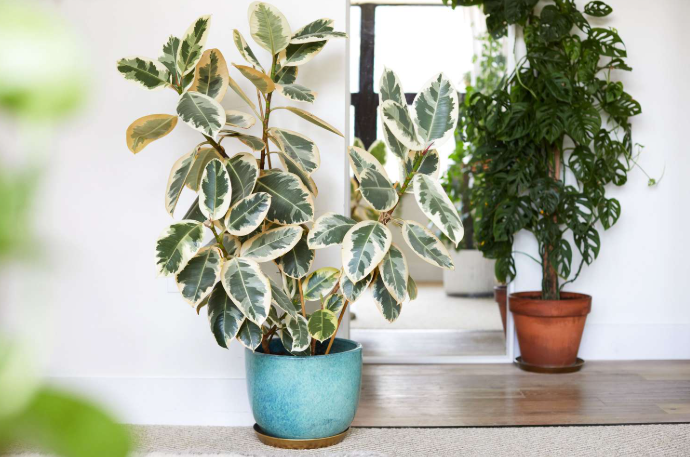
Variegated ficus trees are popular among plant lovers because of their attractive foliage and distinctive patterns. Unlike ordinary green-leaf ficus varieties, variegated types display lighter shades of cream, white, yellow, or pale green across their leaves. These patterns can make a plant stand out in an indoor collection, office, patio, or sheltered outdoor space.
However, variegated plants can have slightly different growing requirements because areas of their leaves contain less chlorophyll. Understanding light, watering, soil, temperature, and pruning can help keep a variegated ficus healthy and attractive.
What Makes a Variegated Ficus Special?
The main feature of a variegated ficus is its patterned foliage. Some leaves may have large sections of light coloring, while others may show subtle streaks or patches.
Because the lighter parts of the leaf contain less chlorophyll, the plant may grow somewhat differently from a fully green ficus. This makes proper lighting particularly important.
A healthy plant should produce new leaves while maintaining good overall color and structure.
Provide Bright, Suitable Light
Light is one of the most important factors when growing a variegated ficus tree.
The plant generally benefits from bright indirect light. A location near a bright window can work well indoors, although intense direct sunlight through glass may cause leaf damage in some conditions.
Insufficient light can also create problems. When a plant does not receive enough light, growth may become slow and the variegated pattern can become less pronounced.
Finding the right balance is therefore important.
Water Carefully
Ficus trees generally prefer consistent but controlled watering.
The soil should not remain completely dry for extended periods, but constantly wet soil can also create problems. Excess moisture around the roots can reduce oxygen availability and contribute to root-related issues.
Before watering, check the moisture level of the soil. If the upper layer has dried to an appropriate depth, the plant may need water.
The exact watering schedule depends on temperature, humidity, container size, soil composition, and light exposure.
Choose Well-Draining Soil
Good drainage is essential for container-grown ficus trees.
A suitable potting mix should allow excess water to move away from the roots while retaining enough moisture for healthy growth. Heavy soil that stays wet for long periods may not be ideal.
Using a container with drainage holes is equally important. Even a good soil mixture cannot compensate for a container that prevents excess water from escaping.
Maintain Comfortable Temperatures
Ficus trees generally perform best in warm, stable conditions. Sudden temperature changes can sometimes cause stress and leaf drop.
Avoid placing the plant directly next to cold drafts, heating vents, or air-conditioning outlets.
If a variegated ficus is moved from one environment to another, gradual adjustment can help reduce stress.
Humidity Can Help
Indoor environments can become dry, particularly when heating or air conditioning is running.
Moderate humidity can support healthier foliage. However, simply increasing humidity is not a substitute for proper watering, lighting, and ventilation.
If humidity is increased significantly, good air circulation should also be maintained.
Fertilize During Active Growth
Fertilizer can support healthy growth when applied appropriately.
During active growing periods, a balanced fertilizer formulated for foliage plants can provide nutrients that support new leaves and root development.
Over-fertilizing should be avoided. Too much fertilizer can contribute to salt buildup in the soil and may damage roots.
Following the product’s recommended dosage is safer than assuming more fertilizer will produce faster growth.
Pruning and Shaping
Pruning can help maintain the desired shape of a ficus tree.
Remove damaged, dead, or unhealthy growth with clean pruning tools. Light shaping can also encourage a more balanced appearance.
Avoid removing too much healthy foliage at one time, especially if the plant is already under stress.
Regular observation is usually better than aggressive pruning.
Watch for Pests
Ficus plants can occasionally attract common indoor plant pests. Signs may include sticky residue, distorted leaves, small insects, or fine webbing.
Regularly inspecting both the upper and lower surfaces of leaves can help identify problems early.
If pests are discovered, isolate the affected plant when possible and choose an appropriate treatment based on the pest involved.
Why Leaves May Change
Leaf changes do not always mean that a plant is seriously unhealthy.
Older leaves naturally age and fall. Environmental changes, moving the plant, watering problems, insufficient light, and temperature fluctuations can also contribute to leaf drop.
Instead of reacting to one damaged leaf, look at the plant as a whole. New growth, soil moisture, leaf color, and overall structure provide better clues about its condition.
Choosing the Right Container
A suitable container gives the roots enough room without being unnecessarily large.
A very large pot can hold excess moisture for longer than the plant needs, particularly when the root system is small.
As the plant grows, it may eventually need repotting. Moving it into a slightly larger container can provide additional room while keeping moisture management under control.
Final Thoughts
A variegated ficus can be a beautiful addition to an indoor or sheltered plant collection when its basic needs are met. Bright indirect light, appropriate watering, well-draining soil, stable temperatures, and occasional feeding can support healthy growth.
If you are looking for different ficus varieties, exploring options such as a variegated ficus tree can help you find foliage with distinctive patterns and colors.
With consistent care and regular observation, these plants can remain attractive for years.