Soap dispensers may seem like a small part of a commercial restroom, but they play an important role in everyday hygiene. In offices, restaurants, schools, hospitals, hotels, shopping centers, and other public facilities, a dispenser needs to be easy to use, reliable, and simple to maintain.
Choosing the right product requires more than looking at its appearance. Businesses should consider capacity, dispensing method, installation, maintenance, durability, and the type of soap being used. A reliable soap dispenser manufacturer can also provide different options for specific commercial applications.
Why the Right Dispenser Matters
Handwashing is one of the most basic hygiene practices in any facility. If soap dispensers are difficult to use, frequently empty, or prone to malfunction, users may be less likely to wash their hands properly.
For facility managers, reliable dispensers can also reduce maintenance problems. A good dispenser should provide consistent dispensing while making refilling and cleaning straightforward.
Manual vs. Automatic Dispensers
One of the first decisions is whether to choose a manual or automatic dispenser.
Manual dispensers usually require the user to press a button or lever. They are generally simple and may be suitable for many environments.
Automatic dispensers use sensors to release soap without direct physical contact. This can be useful in locations where reducing touch points is a priority.
Both options have advantages. The best choice depends on the facility’s requirements, budget, maintenance capabilities, and expected traffic.
Consider Dispenser Capacity
Capacity becomes especially important in busy facilities.
A small dispenser may need frequent refilling if hundreds of people use the restroom each day. A larger-capacity model can reduce the number of maintenance visits.
However, capacity should be matched to actual usage. Oversized dispensers can take up unnecessary wall space and may not be practical for smaller facilities.
Check Compatibility
Not every soap dispenser is compatible with every type of soap. Before purchasing, businesses should check whether the dispenser is designed for liquid soap, foam soap, sanitizer, or another formulation.
Using an incompatible product can cause poor dispensing or clogging.
Facility managers should follow the manufacturer’s recommendations regarding soap type and viscosity.
Think About Installation
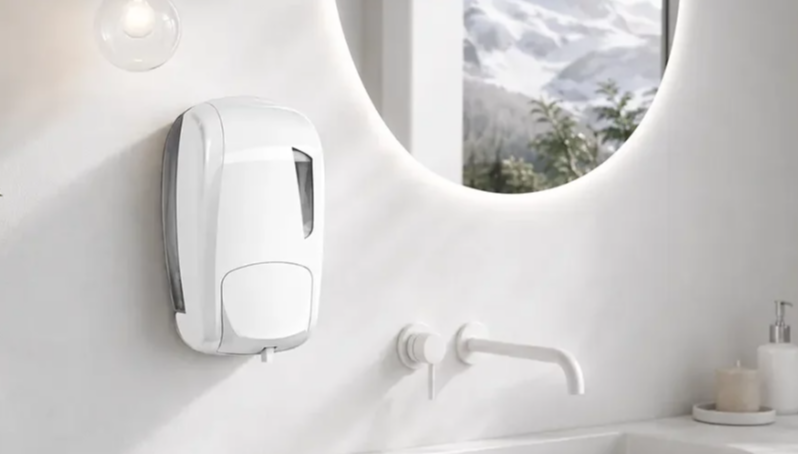
Installation location affects usability. The dispenser should be positioned at a convenient height and in a location that users can easily reach.
Wall space, plumbing fixtures, mirrors, paper towel dispensers, and hand dryers should all be considered when planning the layout.
A dispenser that is technically functional but poorly positioned can still create an inconvenient user experience.
Easy Refilling Is Important
Maintenance staff need to refill dispensers regularly. A product with a simple refill mechanism can save time during routine servicing.
Clear indicators can also help staff identify when soap levels are low.
For large facilities, small improvements in refill efficiency can become valuable over time because maintenance tasks are repeated frequently.
Durability for Commercial Use
Commercial restrooms are demanding environments. Dispensers may be used hundreds of times each day and cleaned frequently.
The construction material and overall design should therefore be suitable for the intended environment.
Businesses should look for products that can withstand regular use and cleaning without becoming difficult to operate.
Hygiene and Cleaning
A dispenser should be easy to clean around its exterior and dispensing area.
Dirt and soap residue can build up around poorly designed units, especially in high-use environments.
Smooth surfaces and practical designs can make routine cleaning easier for staff.
Consider the Overall Restroom Design
The dispenser should work with the rest of the restroom equipment. Businesses may want soap dispensers, paper towel dispensers, waste containers, and other accessories to have a consistent appearance.
A coordinated design can create a cleaner and more professional environment.
Working With a Manufacturer
Businesses purchasing equipment in larger quantities may benefit from working directly with an experienced soap dispenser manufacturer.
Manufacturers can often provide product specifications, installation information, available configurations, and technical guidance.
When requesting a quote, businesses should explain the intended application and expected daily usage. This helps narrow down suitable options.
Final Thoughts
Choosing a commercial soap dispenser requires attention to usability, capacity, durability, maintenance, and compatibility. The right product should support good hygiene while making daily operations easier for facility staff.
For businesses planning a new restroom or upgrading existing facilities, working with an experienced soap dispenser manufacturer can help them compare products and select equipment suited to their specific needs.