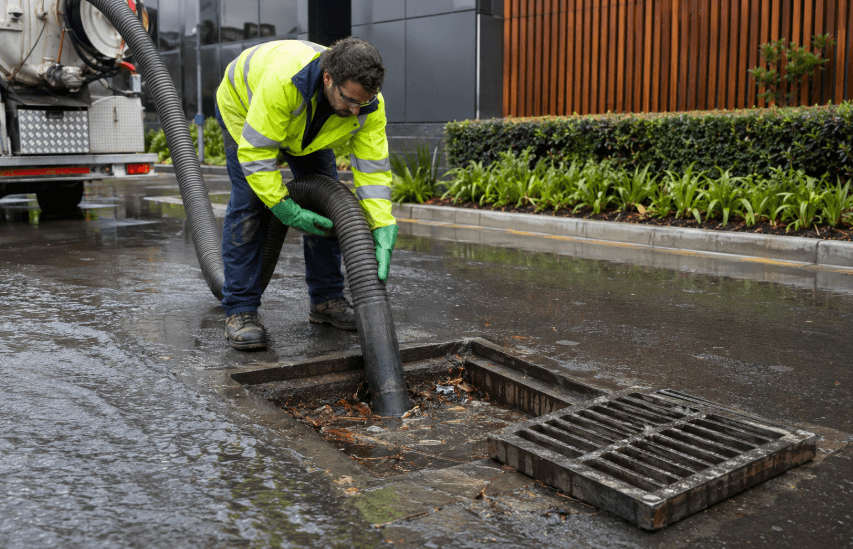
Stormwater pits are the small, easy-to-ignore structures that make a big difference when rain hits hard. They sit at low points around roads, car parks, warehouses, and residential streets, collecting runoff and guiding it into the stormwater network. When they’re working properly, you barely notice them. When they’re not, the warning sign is often water pooling where it never used to.
A key part of keeping these systems functioning is routine stormwater pit cleaning, which removes the silt, litter, and organic sludge that gradually reduces capacity and slows drainage.
What a stormwater pit actually is
A stormwater pit is a junction point in the drainage system. Water enters through a grate or side entry, then drops into a chamber before flowing into an outlet pipe. That chamber does two useful things:
- It provides a place for heavier sediment to settle out instead of continuing into the pipe network.
- It creates a buffer so water can transition from surface runoff to piped flow more smoothly.
Some pits include additional features like silt baskets, gross pollutant traps, or baffles that help capture rubbish and floating debris. On commercial sites, pits may be part of a larger system with multiple inlets, inspection points, and treatment devices.
The hidden job: trapping sediment and debris
In everyday conditions, stormwater carries more than just water. It also picks up:
- Dust and fine sediment from roads and unsealed areas
- Leaves and organic matter from landscaping
- Litter and plastic blown across hardstand areas
- Oils and grime that cling to sediment particles
Stormwater pits act like collection points where this material accumulates. That’s helpful until the buildup becomes significant enough that the pit stops acting as a buffer and starts acting as a blockage.
What goes wrong when pits aren’t maintained
A stormwater pit rarely “fails” all at once. Problems typically build gradually, and the system becomes less resilient over time.
Common consequences of poor maintenance include:
- Reduced capacity: Sediment takes up space that should be available for water during heavy rain.
- Slower drainage: Debris can partially block outlet pipes or restrict flow through baskets and screens.
- Local flooding and ponding: Water backs up onto pavements, car parks, or landscaped areas.
- Pipe issues downstream: When pits overflow with sediment, fine material can move into pipes and settle further along the system.
- Mosquitoes and odours: Standing water mixed with organic matter can create unpleasant conditions, especially in warmer months.
Even a partial restriction can change how runoff behaves during peak rainfall. A pit that copes in a light shower may surcharge in a downpour, pushing water back to the surface.
Why maintenance is about risk, not just cleanliness
The practical value of pit maintenance is that it reduces uncertainty. Storm events are unpredictable, but your drainage capacity doesn’t have to be.
Routine upkeep matters because it:
- Keeps pits operating at their intended storage and flow capacity
- Helps prevent repeated “nuisance flooding” that damages surfaces and landscaping
- Reduces the chance that debris is pushed further into the network where it’s harder to access
- Supports safer pedestrian and vehicle conditions by limiting ponding and slippery runoff paths
For commercial and industrial sites, it can also support broader site management by reducing the likelihood of runoff carrying visible pollutants offsite after a storm.
What typically builds up fastest
Not every property loads pits at the same rate. Buildup is usually faster when there is:
- Construction activity or exposed soil, which increases sediment runoff
- Heavy tree cover, which increases leaf litter and organic sludge
- High traffic areas, where road grime and fine particles are constantly generated
- Poor surface grading, which pushes more debris toward one intake point
- Infrequent rainfall, where dry debris accumulates and then flushes suddenly during the first big storm
This is why a “one-size” maintenance schedule rarely works. The most reliable indicator is how quickly material accumulates on your specific site.
A practical way to think about maintenance timing
Instead of relying only on a calendar, many property managers use a simple trigger-based approach:
- Inspect before the wet season or stormier months.
- Recheck after major rainfall events.
- Clean when sediment or debris has clearly reduced the pit’s effective volume.
The goal is not spotless pits. The goal is keeping enough free space and clear flow paths so the system performs when it matters.
See also: Maintenance Plumbing Solutions For Brisbane Homes And Businesses
How to spot early warning signs
You don’t need specialist tools to notice when a pit may be struggling. Early indicators often include:
- Water sitting around grates long after rain ends
- Visible debris mats at the inlet
- Silt lines showing previous overflow levels
- Unusual smells near the pit, especially in warm weather
- Repeated ponding in the same low areas
Catching these signs early usually means simpler intervention and less chance of larger downstream issues.