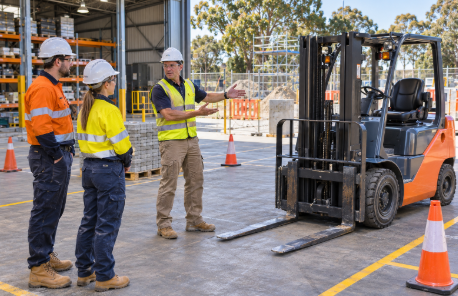
Two of the most commonly required workplace certifications in Australia are the forklift licence and the White Card. Both are legally mandated in specific contexts, yet they cover very different skills and apply to different industries. Workplaces that rely on material handling or construction activity often require workers to hold one or both, and there are dedicated
Two of the most commonly required workplace certifications in Australia are the forklift licence and the White Card. Both are legally mandated in specific contexts, yet they cover very different skills and apply to different industries. Workplaces that rely on material handling or construction activity often require workers to hold one or both, and there are dedicated forklift and white card training courses available across Australia to help people meet these requirements. Understanding what each certification involves is the first step to knowing which one applies to you.
What Is a White Card?
A White Card, formally known as the General Construction Induction Card, is a mandatory certification for anyone working on a construction site in Australia. It is issued under the national Work Health and Safety framework and is required before a person can carry out construction work.
The card is not job-specific. Whether someone is working as a labourer, electrician, plumber or project manager on a construction site, the White Card applies. It covers general workplace safety principles including hazard identification, risk management, emergency procedures and legal obligations under WHS legislation.
Training is typically delivered in a single day through a registered training organisation, and the card itself does not expire, though some states and employers require periodic refresher training.
What Does a Forklift Licence Cover?
A forklift licence, formally called a Licence to Perform High Risk Work (forklift truck class LF), is issued by the relevant state authority and is required for anyone who operates a forklift in a workplace. This is distinct from a White Card because it is equipment-specific rather than industry-specific.
Forklift training covers the safe operation of the machine, load handling, pre-operational checks, workplace hazards associated with forklift use, and relevant regulations. Candidates must complete both theoretical and practical components before sitting a formal assessment.
Unlike the White Card, a forklift licence must be renewed. In most Australian states, it is valid for five years, after which the holder must complete a renewal assessment to continue operating legally.
See also: Best Lifestyle Tips After 100-Unit Wrinkle Care Sessions
Key Differences Between the Two Certifications
While both certifications relate to workplace safety, they serve different functions. The White Card is a broad entry-level requirement for the construction industry. The forklift licence is an equipment-specific high risk work licence that applies across multiple industries including warehousing, manufacturing, logistics and retail distribution.
A person working in a warehouse does not typically need a White Card, but they may need a forklift licence. Conversely, a construction worker who never operates a forklift needs a White Card but not a forklift licence. Workers in some settings, such as civil construction sites that use forklifts, may need both.
Who Needs to Hold These Certifications?
White Cards are required for all workers who carry out construction work as defined under the relevant WHS regulation. This includes new entrants to the industry, experienced tradespeople moving between states, and those returning to the industry after an extended break.
Forklift licences are required for anyone who operates a forklift truck in a workplace, regardless of industry. Employers are legally obligated to ensure that workers operating forklifts hold a current licence. Operating without one can result in penalties for both the worker and the employer.
How Training Is Structured
Both certifications are delivered through registered training organisations (RTOs) and follow nationally recognised frameworks. This means the qualifications are recognised across all Australian states and territories, which is particularly useful for workers who move between states for employment.
White Card training is typically completed in a single session and combines theory with practical activities. Forklift training is more involved, often spanning two to three days depending on the provider and the candidate’s prior experience. Courses that include both theory and hands-on assessment are considered full training programs, while experienced operators may be eligible for assessment-only options.
Maintaining Compliance Over Time
Once certifications are obtained, workers and employers both have ongoing responsibilities. For White Card holders, the card itself does not expire, but the knowledge behind it should be maintained through regular toolbox talks, site inductions and WHS training updates.
For forklift licence holders, renewal before the expiry date is essential. Some employers also require documented evidence of ongoing competency, particularly in high-throughput environments where forklift use is constant. Keeping records of training dates, licence numbers and renewal schedules is a straightforward way to stay compliant without disruption to operations.