A thermostatic mixing valve rarely fails all at once. More often, the small element inside it wears gradually, and the water at the tap creeps a few degrees hotter or colder until someone notices. In a home that might be an annoyance, but in an aged care room or a childcare bathroom, a few degrees can be the difference between comfortable and dangerous. That is why Victorian facilities rely on scheduled checks such as the annual round of TMV testing Melbourne hospitals, schools and aged care homes work through to confirm valves still perform. Between those visits, knowing the warning signs helps you catch a problem early instead of waiting for it to show up on a test report or, worse, on someone’s skin.
Why TMVs Wear Out
A TMV blends hot water, usually stored at 60°C or above to control Legionella, with cold water to deliver a safe outlet temperature. Under the National Construction Code, personal hygiene outlets in aged care, healthcare, early childhood centres and schools must not exceed 45°C. The valve holds that limit using a temperature-sensitive actuator that expands and contracts as conditions change.
That actuator, along with the O-rings and seals around it, works constantly. Over time it can lose sensitivity, seals can harden, and debris from the pipework can collect in strainers and check valves. Changes in supply pressure, such as a new fixture on the same line or work on the hot water system, can also push a valve outside the range it was set up for. None of this is unusual. It is simply why AS 4032.3, the standard covering field testing and maintenance, calls for annual testing and replacement of the thermostatic components within five years of commissioning.
Temperature Warning Signs
The most telling symptoms relate to the water itself.
Water that is hotter than usual. If a basin or shower that once ran comfortably warm now feels noticeably hot, the actuator may be drifting. This is the most serious sign, because the valve exists specifically to prevent scalding. Treat it as urgent and restrict use of the outlet until it has been checked.
Water that runs lukewarm or cold. A valve can also fail the other way. Persistent tepid water is often dismissed as a hot water system issue, but a sticking or partly blocked TMV is a common cause. Staff or residents may then start running taps longer, which wastes water and masks the underlying fault.
Temperature swings during use. Water that surges hot then cool, especially when another tap or toilet nearby is used, suggests the valve is struggling to respond to pressure changes. A healthy TMV should correct these fluctuations quickly.
Slow stabilisation. If the water takes much longer than it used to before settling at a steady temperature, the actuator may be losing responsiveness.
See also: Why a Likable Person Test Will Help You Change Your Life
Physical and Performance Clues
Some signs show up around the valve or the outlet rather than in the temperature.
- Reduced flow. A noticeable drop in water flow at outlets served by one valve can point to blocked strainers or debris inside the valve body.
- Leaks or drips. Moisture around the valve, its fittings or the access panel often indicates worn seals.
- Noise. Humming, chattering or knocking when the outlet runs can mean internal parts are vibrating or the valve is hunting for its set temperature.
- Missing or outdated tags. In commercial settings, TMVs are tagged and recorded with their last test date. A valve with no tag, or one that is clearly overdue, should be treated as unverified regardless of how the water feels.
The Failure You Cannot Feel
The most important safety function of a TMV is invisible in everyday use. If the cold water supply drops out, for example during a mains interruption or a failed component, a properly working valve should shut off the flow rather than send unmixed hot water to the outlet. This fail-safe behaviour can only be confirmed by deliberately isolating the supply during a test.
That is the main limitation of watching for symptoms. A valve can deliver perfectly normal water every day while its shut-off response has quietly deteriorated. Warning signs are useful for prompting action between tests, but their absence is not proof that a valve is safe.
What to Do When You Notice a Problem
Resist the temptation to adjust the valve yourself. TMVs need specialised commissioning, and in Victoria work on them must be carried out by a licensed plumber. Changing the set temperature without proper testing can leave the valve unstable or above the legal limit.
Instead, take a few practical steps:
- Record the details. Note which outlet, what you observed, and when. Specific information helps a plumber trace whether one valve or a wider supply issue is responsible.
- Restrict high-risk use. If water seems too hot in a facility caring for vulnerable people, take the outlet out of service until it is checked.
- Check the register. Confirm when the valve was last tested and when its thermostatic components were last replaced. A valve approaching the five-year mark is a likely suspect.
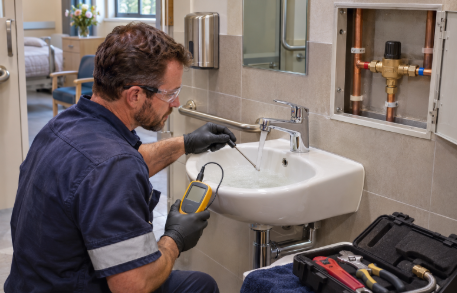
- Arrange an inspection. A plumber can test the outlet temperature and fail-safe response, then repair or replace parts as needed and update the valve’s record.
Paying attention to these signs will not replace scheduled testing, but it does shorten the time a faulty valve stays in service, which is exactly where the risk lies.