There is nothing quite as frustrating as spending hours meticulously applying a set of eyelash extensions, only to have them shed prematurely. If your clients are experiencing poor retention, you might find yourself asking: Why are my lash extensions falling out?
One of the most common reasons is the lash glue. Professional eyelash extension glue is a finicky, highly sensitive chemical product. Understanding how it performs is the key to mastering lash retention. Below, we break down the science of cyanoacrylate, the 7 most common culprits behind adhesive failure, and how to fix them.
How Lash Glue Works (Humidity, Temperature and Curing)
Professional lash glue relies on cyanoacrylate. Unlike regular glue that dries as moisture evaporates, cyanoacrylate cures through polymerization, a chemical reaction triggered by moisture in the air.
● Humidity: If the room is too dry, the glue won’t cure fast enough, causing fumes to linger and extensions to slide off the natural lash. If it’s too humid, the glue shocks cure instantly on the jade stone, losing its bonding power before you even touch the natural lash.
● Temperature: High temperatures speed up the curing process, making fast-drying glues even faster and harder to work with. Low temperatures slow it down drastically.
● The Sweet Spot: Always adjust your environment to the conditions indicated on the product packaging.
7 Common Reasons Your Lash Glue Isn’t Working
1. Wrong Humidity and Room Temperature
If your workspace climate falls outside your adhesive’s recommended range, the cyanoacrylate will either shock-cure or fail to set.
The Fix: Invest in a humidifier or dehumidifier, and keep an AC or heater running to stabilize room conditions. If your room is naturally dry, choose a glue formulated for lower humidity, or vice versa.
2. Expired or Improperly Stored Glue
Lash adhesive has a short shelf life. Unopened, it typically lasts 6 months; once opened, it begins to degrade within 4 to 6 weeks. Exposure to air, heat, and sunlight breaks down the formula.
The Fix: Always note the opening date on the bottle. Store your backups in a cool, dark place (or an airtight container with silica gel packets), and never store opened glue in a refrigerator, as condensation can ruin it.
3. Not Shaking the Glue Bottle Enough
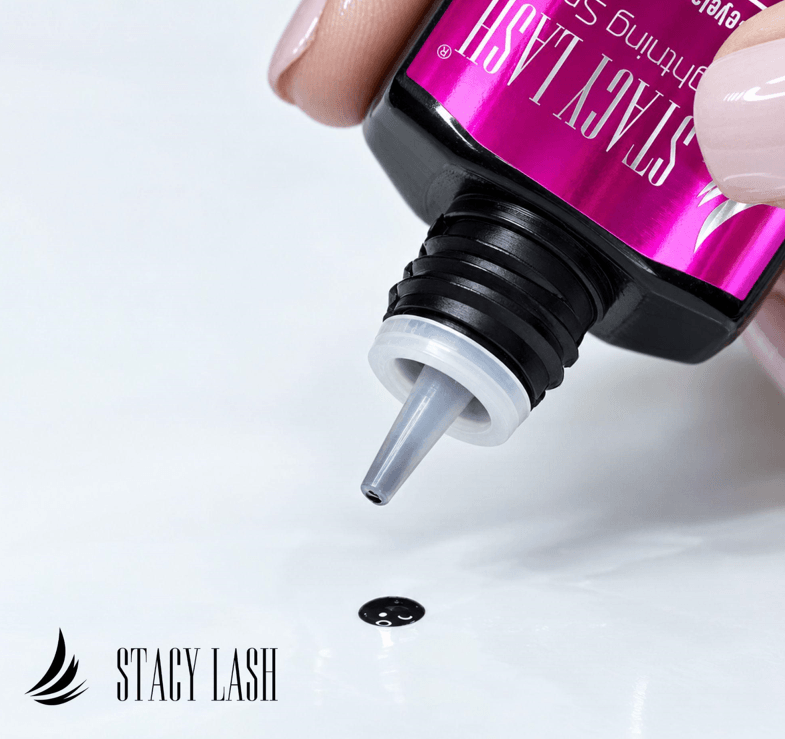
Inside the bottle, the stabilizers, cyanoacrylate, and pigments separate over time. If you don’t shake the bottle properly, you’re dipping into unmixed ingredients, resulting in weak bonds and poor retention.
The Fix: Remove the cap (place a foil sticker over the nozzle to prevent clogging), and shake vigorously from side to side for 30 to 60 seconds before dispensing. Avoid shaking vertically, as liquid can get stuck in the cap.
4. Poor Natural Lash Prep (Oil, Makeup, Residue)
Even microscopic traces of sebum, leftover makeup, or protein buildup on natural lashes act as a barrier, preventing the adhesive from forming a secure bond.
The Fix: Thoroughly cleanse the eye area with a specialized lash cleanser, followed by a primer to strip away any remaining oils and balance the pH of the natural lash.
5. Using Too Much or Too Little Adhesive
Getting the bead size right is an art. Too much glue creates a heavy bond that slides down the lash or fuses multiple lashes together. Too little glue creates an insufficient bond that snaps under normal wear.
The Fix: Dip the extension cleanly into the center of the glue drop at a 90-degree angle and pull it out slowly through a micro-droplet to leave a smooth, thin coating.
6. Using an Old Glue Drop
Adhesive exposed to open air begins curing immediately. If you use a glue drop for too long, it starts polymerizing on your tile or jade stone, drastically weakening its sticking power.
The Fix: Dispense a fresh drop of lash glue every 15 to 20 minutes (or sooner if your room is warm or humid).
7. Incorrect Attachment and Placement
If you are applying the extension with a “brushing” motion instead of a direct placement, or if the base of the extension has a “gap” and isn’t flush against the natural lash, the bond will break quickly.
The Fix: Ensure 100% surface contact between the extension base and the natural lash. The extension should hug the natural lash smoothly without lifting at the tips or roots.
How Long Does Lash Glue Take to Dry?
Lash artists frequently ask: How long does lash glue take to dry? The drying speed depends heavily on your skill level and environment:
● Beginner Glues (2–6 seconds): Ideal for students or artists still perfecting their placement speed, giving extra seconds to adjust the extension.
● Intermediate Glues (1–2 seconds): A great balance for experienced stylists working at a steady pace.
● Advanced Glues (0.3–1 second): Designed for lightning-fast lash artists who do volume or mega-volume wrapping and need instant grabs.
How to Choose the Right Lash Glue for Your Conditions
When selecting a high-performance formula from a professional collection, evaluate these four factors:
1. Drying Speed: Match your application speed to the glue’s dry time.
2. Humidity Range: Check the manufacturer’s guidelines to ensure it fits your salon’s climate.
3. Skill Level: Do not buy an ultra-fast 0.5-second glue if you are a beginner, as premature curing will ruin retention.
4. Sensitive Clients: If clients frequently experience irritation or watery eyes, look for low-fume, sensitive-friendly formulations.
Tips to Improve Lash Retention
● Control the Environment: Keep windows closed away from direct sunlight and drafts.
● Master Your Dipping Technique: Always check that no excess “glob” or “ball” forms at the base of the extension.
● Proper Aftercare Education: Remind clients to avoid oil-based skincare products near the eyes.
When the Problem Isn’t the Glue
Sometimes, poor retention is completely outside of your control. Consider these external factors:
● Natural Lash Cycle: Humans naturally shed 2 to 5 natural lashes a day. When a natural lash falls out, the attached extension goes with it.
● Client Lifestyle & Hormones: Heavy workouts, saunas, sleeping face-down, high stress, or hormonal fluctuations (pregnancy, menstrual cycles) can increase sebum production and weaken retention.
See also: 7 Best SEO Traffic Services for Businesses Looking to Grow Their Online Presence
Conclusion
Troubleshooting poor lash retention comes down to process control. By auditing your environment, mastering your prep, and selecting the right adhesive for your climate, you can eliminate guesswork and guarantee flawless sets every time.