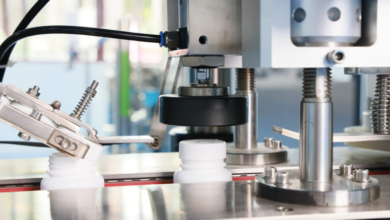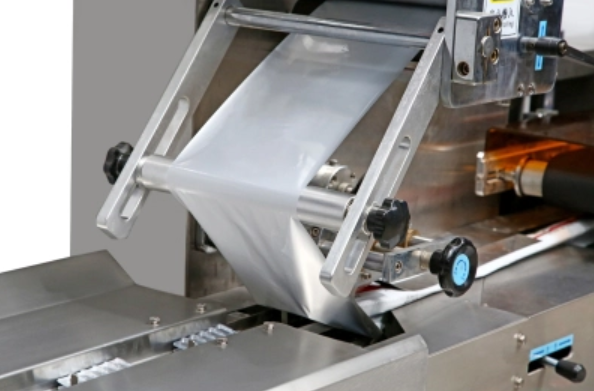
Packaging plays an important role in protecting products, maintaining presentation, and preparing goods for storage or distribution. As production volumes increase, manufacturers often look for ways to make packaging faster and more consistent while maintaining product quality.
Overwrapping is one method used in several packaging applications. It involves wrapping a product or package with a protective material, often creating a neat and secure outer layer.
An overwrapping machine can automate this process and help manufacturers handle repeated packaging operations efficiently.
What Is Overwrapping?
Overwrapping involves placing a film or other wrapping material around a product or existing package.
The wrapping material can provide an additional layer of protection while also improving the appearance of the finished package.
Depending on the application, the package may be folded, sealed, or otherwise secured during the process.
Why Automation Matters
Manual packaging can become difficult when production volumes increase.
Workers may need to repeat the same folding, wrapping, and sealing movements hundreds or thousands of times. Automation can reduce repetitive manual work and create a more consistent packaging process.
An automated machine can perform programmed movements at a controlled speed.
Consistent Packaging
Consistency is important in many consumer and industrial products.
A machine can help maintain similar wrapping patterns, folds, and sealing results across a production run.
Consistent packaging can make products look more professional and may also simplify downstream handling.
Common Applications
Overwrapping equipment can be used in various industries.
Potential applications include:
- Food products
- Consumer goods
- Cosmetics
- Pharmaceutical packaging
- Stationery
- Household products
- Promotional items
- Retail packages
The machine configuration depends on the product size, shape, material, and required production speed.
Packaging Materials
Different products may require different wrapping materials.
Film selection depends on factors such as flexibility, transparency, sealing characteristics, strength, appearance, and compatibility with the machine.
The wrapping material should also meet any industry-specific requirements associated with the product.
Product Size and Shape
Not every machine is designed for every product.
Before purchasing equipment, manufacturers should identify the dimensions and shape range of the products that will be wrapped.
If multiple product sizes are expected, adjustable equipment may provide greater flexibility.
Production Speed
Machine speed is an important consideration for high-volume operations.
However, maximum speed should not be the only purchasing criterion. Businesses should consider actual operating speed, changeover time, product handling, downtime, and packaging quality.
A machine that runs consistently at the required production rate may be more useful than equipment that has a higher theoretical maximum speed.
Automation Features
Modern packaging systems may include sensors, automatic film feeding, temperature controls, product positioning systems, and other automation features.
These functions can reduce manual intervention and improve production consistency.
The appropriate level of automation depends on the size of the operation and production requirements.
Changeover Requirements
Manufacturers that package different products may need to change machine settings regularly.
Quick and straightforward changeovers can reduce downtime.
When evaluating an overwrapping machine, businesses should ask how easily the equipment can be adjusted for different product dimensions and wrapping materials.
Maintenance
Regular maintenance is necessary to keep packaging equipment operating reliably.
Maintenance tasks may include cleaning, lubrication, inspection of moving components, checking sealing systems, and replacing worn parts.
Following the manufacturer’s maintenance schedule can help reduce unexpected production interruptions.
Operator Training
Even highly automated packaging systems require trained operators.
Staff should understand machine controls, material loading, product positioning, safety procedures, and basic troubleshooting.
Proper training can improve both productivity and workplace safety.
Choosing the Right Machine
Businesses should evaluate:
- Product dimensions
- Product weight
- Packaging material
- Required production speed
- Desired automation level
- Changeover frequency
- Available floor space
- Maintenance requirements
- Technical support
- Future production needs
These factors can help identify equipment suited to the actual packaging environment.
Final Thoughts
Overwrapping can provide a practical way to protect and present products while supporting efficient packaging operations.
For businesses handling repeated packaging tasks, an overwrapping machine can automate wrapping and improve consistency across production runs.
The best equipment depends on the product, packaging material, production volume, required speed, and level of automation. Careful planning before purchase can help manufacturers select a system that fits their long-term needs.