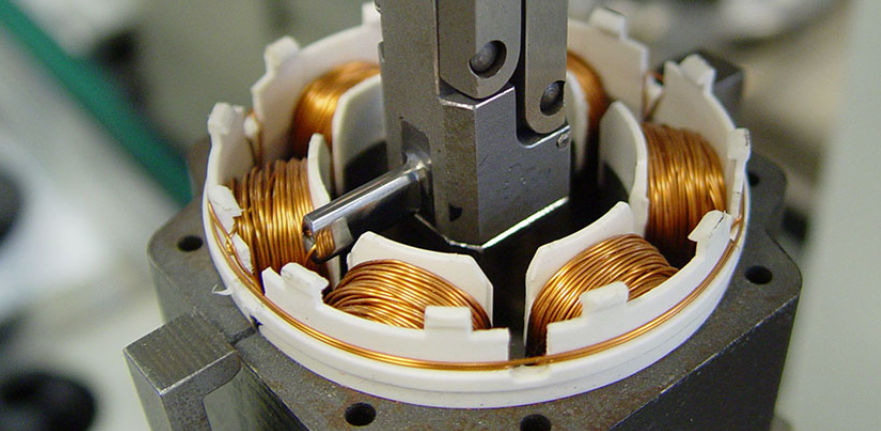
Modern electrical and motor manufacturing requires winding equipment that can provide accuracy, speed, and repeatable results. Coil winding is a critical production stage because the arrangement and quality of wire directly influence the electrical performance of the finished component. A stator needle winding machine can automate complex stator winding processes, while a flyer machine offers another approach for efficiently guiding wire during coil production. Needle winding technology is particularly useful when manufacturers need precise wire placement in compact or specialized winding areas. With advanced motion control, programmable settings, and automated operation, needle winding machines can help manufacturers improve productivity while maintaining consistent coil quality.
What Is a Needle Winding Machine?
A needle winding machine is an automated piece of equipment designed to wind insulated wire around a stator, bobbin, coil former, or other electrical component. Instead of relying on a traditional rotating flyer to distribute the wire, the machine uses a winding needle to guide the wire into the required position.
The needle moves through controlled paths while the workpiece or winding assembly follows a programmed motion. This allows manufacturers to create specific winding patterns with high accuracy.
Needle winding technology is commonly associated with applications where space is limited and wire must be placed precisely within slots or around compact components.
How Needle Winding Technology Works
During the winding process, the machine feeds wire through a specialized needle. The needle moves according to a programmed trajectory, placing each section of wire in the required location.
The system can control several factors, including winding speed, wire tension, needle movement, number of turns, and positioning. These parameters can be adjusted according to the design of the component.
Once the correct settings have been established, the machine can repeat the same winding sequence across multiple production cycles. This repeatability helps manufacturers maintain consistent results during high-volume production.
Precise Wire Placement
One of the main advantages of needle winding is its ability to achieve controlled wire placement. In motor manufacturing, the available winding space can be limited, making accurate positioning essential.
A programmable needle mechanism can guide the wire into specific slots or areas without relying entirely on manual intervention. Proper placement can reduce gaps, overlaps, and irregular winding patterns.
Precise winding also helps manufacturers maintain the required coil geometry, which can contribute to consistent electrical characteristics across finished components.
Consistent Wire Tension
Wire tension is an important factor in any coil winding operation. Inconsistent tension can result in loose coils, damaged insulation, wire breakage, or uneven winding.
Modern needle winding machines can incorporate tension-control systems that regulate wire tension throughout the production cycle. Stable tension helps ensure that each turn is positioned correctly and remains securely in place.
For manufacturers working with thin or delicate wire, controlled tension can be particularly important because excessive pulling can damage the conductor or its insulation.
High-Speed Coil Production
Manufacturing facilities often need to produce large numbers of coils within limited production schedules. Automation allows needle winding machines to perform repetitive operations quickly and consistently.
Once a production program is configured, the machine can continue winding according to predetermined parameters. This reduces the amount of time required for manual positioning and repetitive operations.
Higher production speed can increase manufacturing capacity, particularly when the winding machine is integrated with automated loading, unloading, testing, and assembly systems.
Programmable Controls
Modern winding equipment typically uses computerized controls to manage the movement of the needle and other machine components. Operators can enter or select winding programs based on the component being manufactured.
Programs can include information about the number of turns, winding direction, speed, movement pattern, and other parameters. This makes it easier to reproduce the same winding process when producing large batches.
Programmability also makes the equipment more adaptable when manufacturers need to switch between different coil or motor designs.
Suitable for Complex Winding Patterns
Some electrical components require winding patterns that are difficult to achieve manually. Needle winding equipment can be programmed to follow complex paths and place wire in carefully defined positions.
This capability is useful when working with compact stators, concentrated windings, and other specialized motor components. The machine can coordinate needle movement with component rotation or positioning to create the required winding arrangement.
The ability to manage complex patterns can expand the range of products a manufacturer can produce using automated winding technology.
Applications in Motor Manufacturing
Needle winding machines are widely useful in motor and electrical component manufacturing. They can be used for different stator designs, depending on the machine configuration and winding requirements.
Applications may include small electric motors, automotive components, household appliances, fans, pumps, compressors, power tools, and industrial equipment.
Manufacturers can select machine configurations based on factors such as stator dimensions, wire diameter, winding style, required production volume, and available automation.
Benefits for BLDC Motors
Brushless DC motors often require carefully controlled stator winding to achieve the desired electrical performance. Needle winding technology can support the production of stators where accurate placement of wire within compact slots is necessary.
Automated winding can help manufacturers maintain repeatable coil dimensions and winding patterns. This is valuable for producing multiple identical motor components while minimizing variations between production batches.
Reduced Manufacturing Errors
Manual winding processes can be affected by operator fatigue, inconsistent technique, and repetitive movements. Automation reduces the number of manual steps involved in the winding operation.
A needle winding machine follows programmed movement paths, allowing manufacturers to standardize production procedures. When the equipment is correctly configured and maintained, it can reduce common winding inconsistencies.
Automated inspection and testing can further support quality control by identifying components that do not meet required specifications.
Better Material Utilization
Copper wire is an important raw material in motor and coil production. Incorrect winding can lead to excessive wire usage, damaged material, or rejected components.
Precise wire guidance allows the machine to use the required amount of material more effectively. Consistent winding tension and positioning can reduce unnecessary waste and improve overall production efficiency.
Better material utilization can contribute to lower operating costs, especially in high-volume manufacturing environments.
See Also: How to Choose the Right Garage Door Style for Coastal Homes
Integration With Automated Production Lines
Needle winding equipment can be integrated into larger automated manufacturing systems. A production line may include stator loading, winding, wire cutting, forming, terminal connection, testing, inspection, and unloading.
Integration reduces unnecessary manual handling and creates a more organized material flow. Sensors and programmable controllers can coordinate different stages of the process.
When winding equipment communicates effectively with other production stations, manufacturers can improve throughput and gain better visibility into production performance.
Maintenance and Operator Training
Regular maintenance is essential for reliable winding performance. Components such as needles, wire guides, tension systems, sensors, motors, and mechanical assemblies should be inspected regularly.
Operators should also understand motor assembly line controls, setup procedures, safety requirements, and basic troubleshooting. Proper training helps prevent setup errors and supports consistent production.
Preventive maintenance can reduce unexpected downtime and help extend the useful operating life of the equipment.
Conclusion
Precision, repeatability, and production speed make automated winding technology valuable for modern electrical manufacturing. A motor stator winding machine can support accurate stator production, while a flyer machine provides an alternative winding approach for suitable applications. Needle winding machines are particularly effective when wire must be guided through compact spaces or placed according to complex winding patterns.
With programmable controls, controlled wire tension, precise movement, and high-speed operation, needle winding technology can improve manufacturing consistency and reduce manual effort. When integrated with automated testing and other production equipment, it can create a streamlined manufacturing process capable of meeting demanding production requirements. As electric motors continue to be used across automotive, industrial, appliance, and automation applications, efficient coil winding technology will remain an important part of modern motor manufacturing.